Timing Multi-GNSS Receiver Module
Model
GT-100Achieves the world's highest robustness and stability by receiving dual band(L1/L5)

High-precision time synchronization technology using GNSS—GPS being a common example—facilitates the proper and stable functioning of vital social infrastructure. However, growing geopolitical risk has led to jamming and spoofing that have damaged user trust in GNSS signal integrity. FURUNO ELECTRIC believes that solving such problems is their mission as a vendor, which is why they are devoting their energies to further technological development.
Mobile phone network base stations, broadcasting facilities, electric power grids, and other key infrastructure rely largely on Global Navigation Satellite Systems (GNSS) for high-precision time synchronization. However, the open specifications of GNSS signals make them vulnerable to jamming (interfering waves), spoofing (fraudulent signal usage) and other attacks and interference. Moreover, the signals are highly susceptible to interference from LTE base station transmissions.
To overcome these weaknesses, vendors integrate countermeasures into equipment such as GNSS receivers and antennae. One driving factor behind increasing countermeasure deployment is growing geopolitical risk. In areas of conflict around the world, such as the Ukraine–Russia border and the Gaza Strip, GNSS jamming is a common occurrence and reports of spoofing attacks are virtually endless.
Amid such international trends, the Norwegian government began holding Jammertest in 2022. This is an open test event during which military and government institutions, research organizations, and industry vendors field-test their jamming resistance methods and technologies on the island of Andøya (located near the northern tip of the Scandinavian Peninsula). Under normal circumstances, such tests are not held publicly due to the nature of the technologies involved, making Jammertest a nearly one-of-a-kind opportunity for such verification tests. The third Jammertest was held in September 2024, and FURUNO joined for their first time, as Japan's first corporate participant.
Chief Engineer Kunihiko Hashimoto of the System Products Division described FURUNO's motivation for taking part:
"One reason was to check the results of onsite assessments of FURUNO's GNSS receivers. Many users of our products, which include major telecommunications vendors, came to the event. It provided an unparalleled opportunity to witness their use of FURUNO products up close and in person. As a GNSS receiver vendor, we see it is our mission to develop, one by one, countermeasures to GNSS vulnerabilities and design products that can stand up to unforeseen challenges. That's why we went to Jammertest."
An important location in the Arctic region, Andøya is also home to a military base and a rocket launch site. The Jammertest test site is on the seashore, hedged in by steep mountains. Because of this, even interfering waves generated from the mountaintop for tests have almost no adverse effects on other facilities and people.
During the five-day test event, Hashimoto and his team took advantage of the time difference between Norway and Japan to send results to the FURUNO ELECTRIC headquarters during downtime and then make use of the results in the following day's tests. This enabled them to pursue a rapid verification–improvement cycle throughout the event.
"Without exposing our equipment to real-life jamming waves, it's impossible for us to design true measures against GNSS vulnerabilities," says Hashimoto. "Norway shares a border with Russia, and their military preparedness—both offensive and defensive—is on an entirely different level than that of Japan. We participated in the tests with the goal of achieving 100-percent success for all verification items."
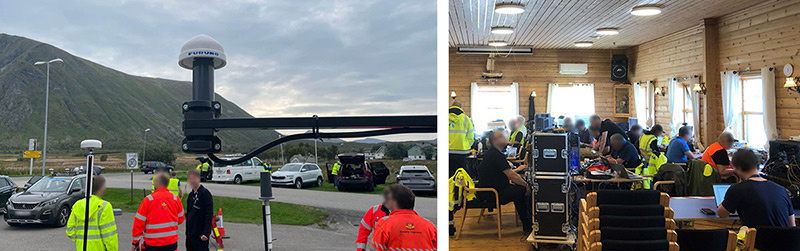
Photos from Jammertest. Left: an outdoor antenna installed for the event. Right: same-industry corporate participants working in competition, side-by-side in rows of desks.
FURUNO has already reflected the results of verification tests at Jammertest in product vulnerability countermeasures.
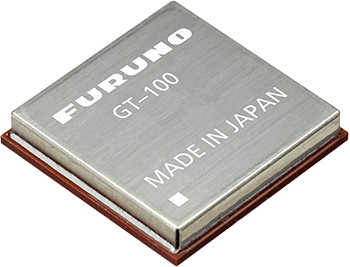
One example is the GT-100 dual-band timing GNSS receiver module, which is capable of signal receipt in the L1 band (1575.42 MHz) as well as the L5 band (1176.45 MHz). The GT-100 is unique in that, even if L1-band receipt becomes impossible, it is still capable of receiving signals in L5 and maintaining system operability through those alone. This functionality, rarely seen in other GNSS receivers, offers, according to Hashimoto, "precision, reliability and robustness together in one package," fostering high demand for the GT-100 in the key-infrastructure market.
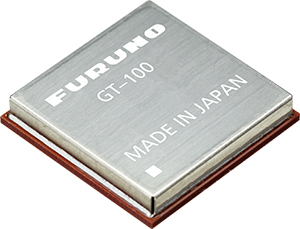
GT-100, Dual Band Timing GNSS Receiver Module
Moreover, it complies with the G.8272 PRTC-A (error tolerance of 100 ns or less) and G.8272 PRTC-B (error tolerance of 40 ns or less) international standards, and is capable of outputting highly accurate time information synced with Coordinated Universal Time (UTC), which serves as a global standard time source. Furthermore, a firmware update is planned in the near future to ensure compatibility with new signals for fraudulent-signal detection, have been provided since 2024 by Japan's Quasi-Zenith Satellite System (QZSS)—also known as Michibiki—and since 2025 by the European GNSS Galileo. This will improve system robustness even further.
FURUNO is utilizing know-how gained through Jammertest in their new GF-100 module, which is slated for release in summer 2026. The GF Series are time-synchronization GNSS modules, each with a high-performance oscillator built in. The current model, GF-88, is a single-band product, but the upcoming GF-100 will be dual-band compatible and also come with a holdover function that utilizes its built-in oscillator to ensure continued operation should GNSS signals be lost. The current-model GF-88 is used as a backup module in case of lightning strikes and similar situations; the new version will be usable as a backup even in the event of complete GNSS signal loss due to jamming or spoofing.
Both products were tested from September 15 to 19, 2025, during Jammertest, and product functionality is being refined further in preparation for the GF-100 market release.
In addition to bolstering measures against GNSS module vulnerabilities, it is important to design antennae in ways that minimize interference from LTE base station signals.
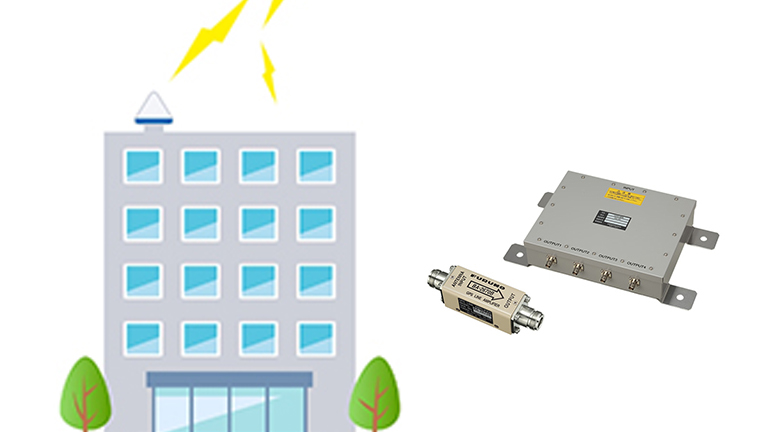
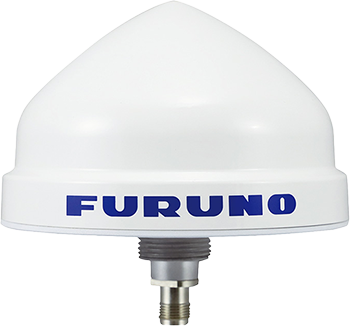
Precise time synchronization is vital for mobile phone network base station operations, and time-sync information is provided by GNSS. Unfortunately, the strong signals emitted by LTE base stations often interfere with weaker GNSS signals, which damages user trust in GNSS technology. The AU-500 multi-GNSS timing antenna was designed to rectify this shortcoming in time-sync operations. It's a dual-band-compatible product designed with strong weather resistance.
The most effective way to market this product's performance in terms of resistance to signal interference is by presenting data from actual usage, but FURUNO had been unable to obtain such data previously. So they partnered with Ritsumeikan University to conduct interference tests.
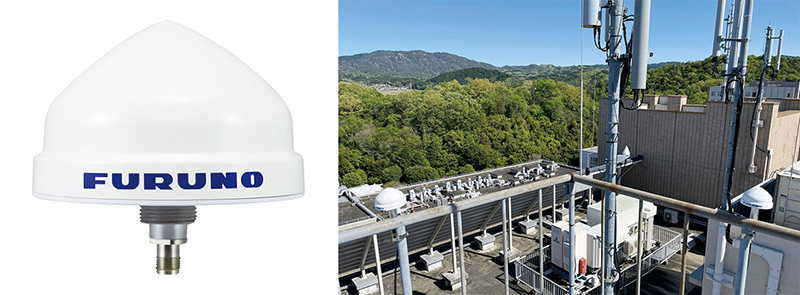
The AU-500 multi-GNSS timing antenna (left), which was used in an experiment to test for base station signal interference prevention performance (right)
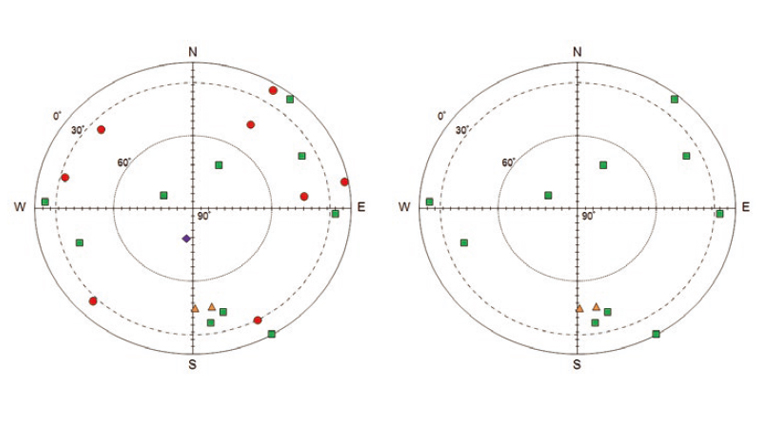
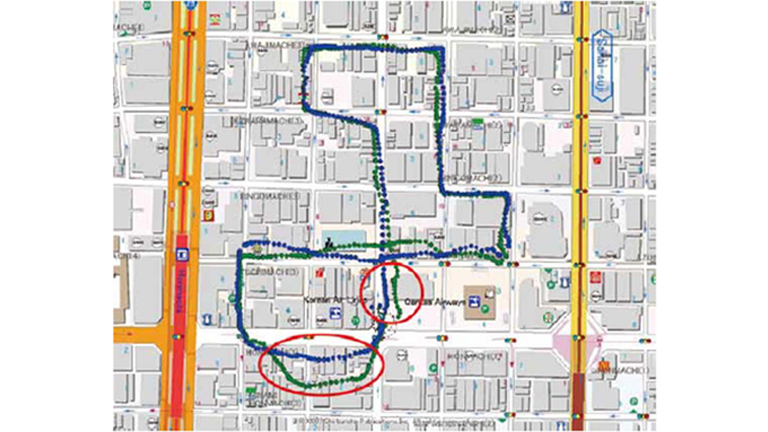
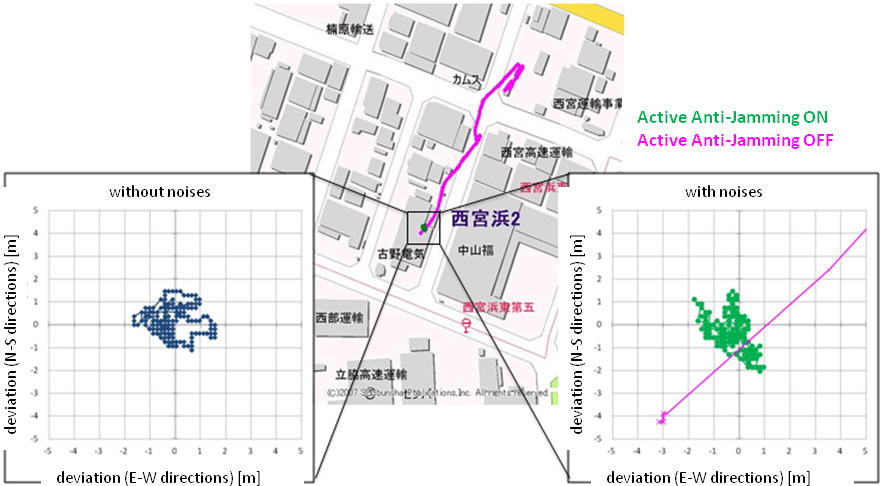
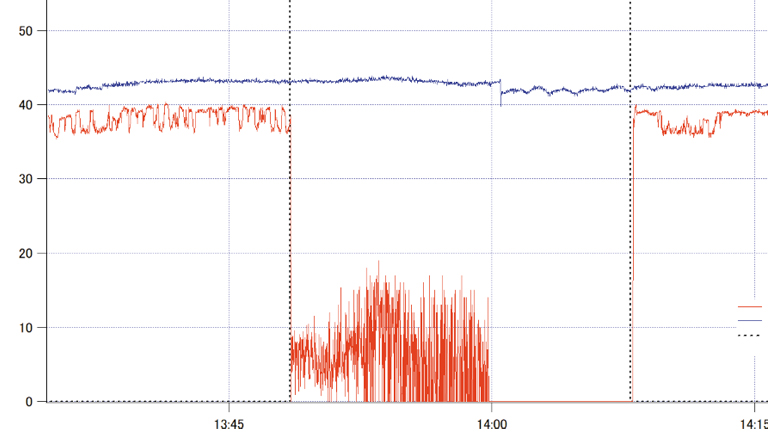
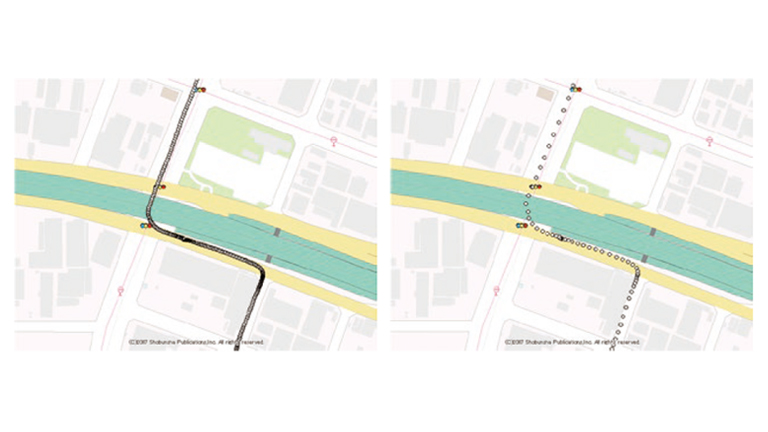
The tests used two AU-500s to confirm signal reception performance both with and without interference countermeasures added. The unmodified (control) antenna exhibited constant receipt failures for positioning operations during weekday, daytime test periods, whereas the AU-500 with added countermeasures maintained a strong signal throughout the same test period (see figure).
"It's not possible to check whether an antenna offers these interference countermeasures by looking at standard spec sheets alone. That's why the AU-500, whose performance has been verified, is the best choice. Customers can rely on FURUNO products," explains Hashimoto.
FURUNO's blue logo represents precision, reliability and robustness. It is a must for customers seeking stable GNSS-based operations.
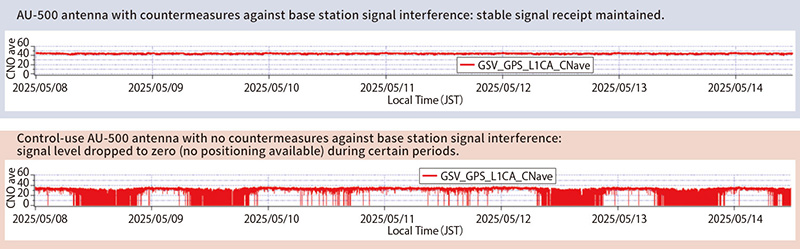
Results of Comparative Tests for GPS Signal Receipt Performance