The Observation Network Created by the Earthquake Proves Useful for Accurate Timekeeping (Part Two of Two) - A Solution to the "Mr. Higgins Problem" in Space -


May 8, 2026
In this inaugural installment of "FURUNO Field Report" -a new series delivering on-the-ground accounts of Furuno Electric's activities- we report on "GNSS Time Sync 2025," held on October 22, 2025, at the IIJ Group headquarters in Iidabashi, Tokyo.
The gathering marked Japan's first event dedicated exclusively to GNSS time synchronization.* Five speakers from the public and private sectors, including Furuno Electric, took the stage, while a diverse audience of users, vendors, and researchers from fields such as broadcasting and telecommunications engaged from their respective viewpoints. Drawing 104 on-site attendees and 154 online participants,* the event became a vibrant forum for information exchange. In this article, we look back at the presentations and examine why such an initiative carries so much weight today.

The venue
The venue, IIJ Group headquarters, is situated in a high-rise towering over the west exit of JR Iidabashi Station. Stepping through the ticket gates and looking up, I was instantly reminded of an experience from more than three decades ago.
Readers of a certain generation likely remember their "first encounter with the WWW." Mine occurred at IIJ's office shortly after the company's founding. At the time, they were located in Akasaka-Tameike—prime real estate, yet housed in an aging building slated for demolition. I still vividly recall the late-afternoon sun streaming into the room, and the profound shock of realizing that a single click could connect me to the world.
Watching IIJ's evolution up close in the years that followed, I came to view the company as an organization uniquely capable of integrating and delivering the hardware, software, technology, and expertise required to weave the benefits of the internet into the very fabric of society. With IIJ hosting an event centered on "GNSS and time synchronization," it was impossible not to feel a profound sense of anticipation.
The day's five speakers comprised an impressive lineup of practitioners, researchers, and government officials. A comprehensive summary of each presentation has been published on the Cabinet Office's Quasi-Zenith Satellite System (Michibiki) website. While encouraging readers to explore that official report, I would like to examine the background and significance of this event through three key perspectives.
Michibiki Team Participates in the Time Synchronization Seminar "GNSS TimeSync 2025" (Cabinet Office Michibiki Website, December 3, 2025)
The first perspective centers on the fact that GNSS time synchronization is a cross-industry technology embedded deep within our modern systems.
Although awareness is growing that GNSS time synchronization serves as the crucial "infrastructure within the infrastructure," it rarely captures the spotlight. In broadcasting, for instance, attention naturally goes to the hardware and software used for reporting, editing, and program distribution, followed by the networks that support them. Yet, nested even deeper are the system technologies that keep those networks running.
Time synchronization resides in that very inner sanctum. In telecommunications, the spotlight typically shines on user terminals, base-station equipment, or switching systems. Similarly, within power grids, financial networks, and data centers, the teams responsible for time synchronization are seldom positioned at the forefront; instead, they operate deep within the organization, quietly anchoring each infrastructure from behind the scenes.
Crucially, the core requirement—reliably receiving GNSS signals to generate and supply high-quality timing data—remains identical across all sectors, as do many of the technical challenges. A primary objective of this event was to facilitate cross-sector knowledge sharing among the engineers who shoulder these deep-level infrastructure responsibilities within their respective industries.
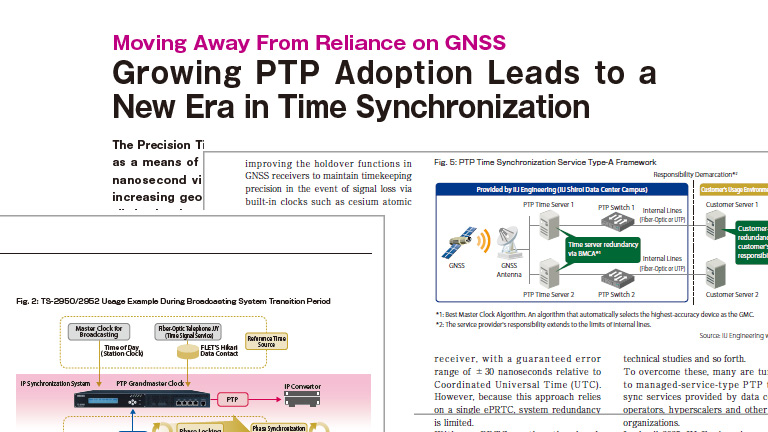
This was evident, for example, in the presentation by Kei Fujinami of Seikoh Giken, who introduced A-RoF technology that converts GNSS signals into optical signals for long-distance transmission over fiber-optic cables. It was equally clear in the presentation by Kohei Suzuki of Seiko Solutions, who addressed our current reliance on GNSS as a time source alongside the evolution and adoption of PTP (Precision Time Protocol). Both sessions shared a common thread: providing robust solutions capable of cutting across traditional industry boundaries.

(Left) Kei Fujinami, SEIKOH GIKEN Co., Ltd.; (Right) Kohei Suzuki, Seiko Solutions Inc.
The second perspective addresses the threats currently confronting us. It goes without saying that the escalating and increasingly sophisticated jamming, spoofing, and other interference activities tied to regional conflicts can no longer be dismissed as someone else's problem. This acute sense of urgency was clearly shared across the room.
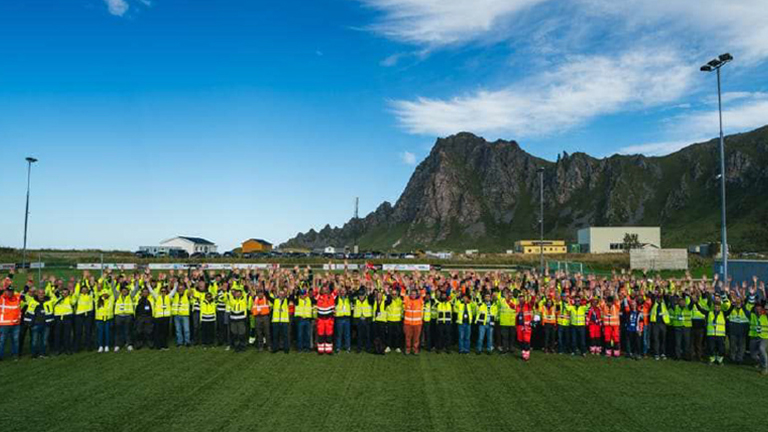
Attendees gained a much sharper understanding of these threats through the report by Kunihiko Hashimoto of Furuno Electric on Jammertest 2025 in Norway—one of the world's premier field trials for interference and jamming. His subsequent presentation on tests involving GNSS interference from domestic LTE base station emissions also sparked intense interest. When data demonstrating a dramatic reduction in interference—achieved simply by swapping the GNSS antenna—flashed on the screen, you could feel the audience's attention instantly lock onto it.
Drawing from the tense atmosphere of the Norwegian test site and concrete data from the LTE interference testing, Mr. Hashimoto emphasized that in everyday environments where intentional or unintentional interference may lurk, receivers must possess more advanced detection capabilities, which directly dictate service quality. This message clearly struck a chord with the audience.
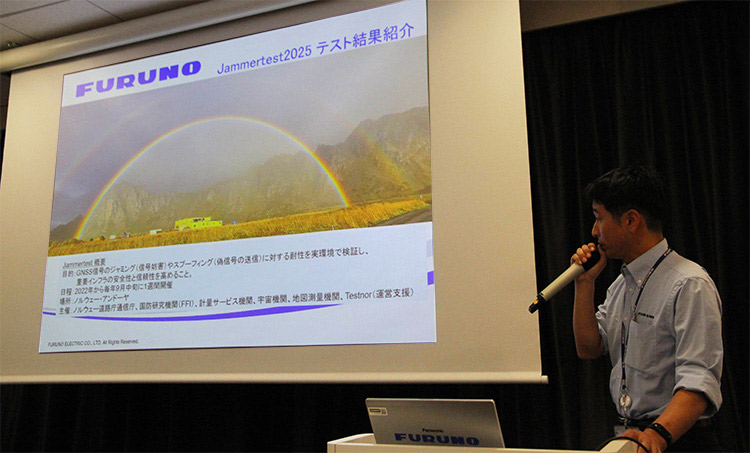
Kunihiko Hashimoto, FURUNO ELECTRIC CO., LTD.
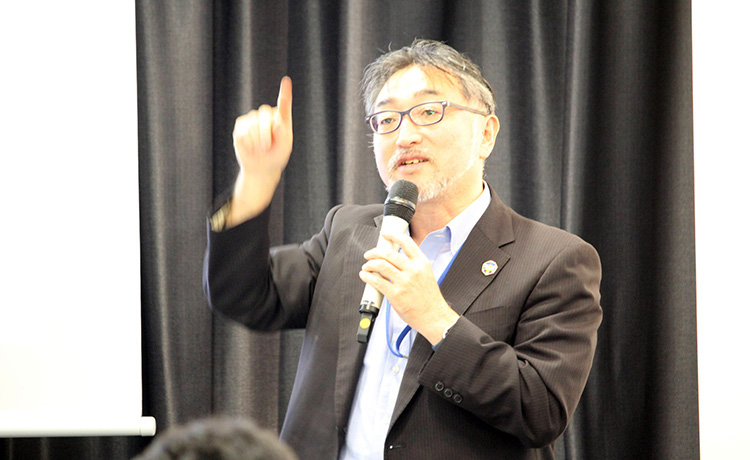
Kenji Mikami, Cabinet Office
The third perspective centers on a vision for a multilayered future. In his presentation, Kenji Mikami of the Cabinet Office illuminated the mechanics of the quasi-zenith orbit—formed by inclining a geostationary orbital plane and elongating its major axis. He illustrated how strategically deploying the Michibiki satellite constellation within these orbits empowers Japan to provide sovereign positioning and time synchronization signals independently, free from reliance on external global systems.
Tetsuya Ido of NICT introduced cutting-edge space weather forecasting initiatives designed to mitigate ionospheric disturbances triggered by solar flares. He also detailed ongoing efforts to harness optical lattice clocks for the pinnacle of timekeeping precision, alongside a blueprint for a nationwide infrastructure network tasked with distributing this ultra-precise timing data via fiber-optic networks.
The Michibiki constellation transmits positioning signals from altitudes of 36,000 to 40,000 kilometers—nearly twice that of GPS satellites, which orbit roughly 20,000 kilometers above the Earth. Conversely, a fiber-optic distribution network for timing data would be woven across the terrestrial landscape. Viewed collectively, these dual infrastructures—one soaring high above and the other running deep below, effectively sandwiching conventional GNSS—revealed a resolute future vision: safeguarding precise time through a robust, multilayered architecture.
The event itself was born from an awareness, articulated by Bunji Yamamoto of IIJ, that while our reliance on GNSS for time synchronization is immense, the inherently open nature of its specifications leaves it uniquely vulnerable. The gathering sought to confront these current threats and illuminate practical countermeasures. Closing the seminar, the organizer thanked participants for their overwhelming enthusiasm and pledged to turn this into a recurring event. Having experienced the energy in the room firsthand, I can confidently state that it was an unmitigated success.
The office building hosting the venue stands on the historic earthworks near the former Ushigome Gate of Edo Castle. Looking out the windows past the JR Chuo Line, we could gaze down at the deep, dark waters of the outer moat. As I pondered where those waters originated, and how ancient techniques for storing and channeling water once anchored cities and civilizations, a striking analogy took shape.
From basic irrigation and safe drinking water to sterile water for surgery and ultrapure water for semiconductor fabrication, humanity has relentlessly pursued ever-higher water quality. If information and communication networks are modern waterways, and the timing data flowing through them is the water itself, then our requirements for precision are escalating rapidly—from microseconds to nanoseconds, and onward to picoseconds. We must master the use of time signals that fall from the heavens like rain, while simultaneously fortifying our defenses against the inevitable "droughts" when those signals are severed.
Ultimately, this event provided an invaluable opportunity to recalibrate our understanding of the current technological landscape. I eagerly look forward to attending the next installment.
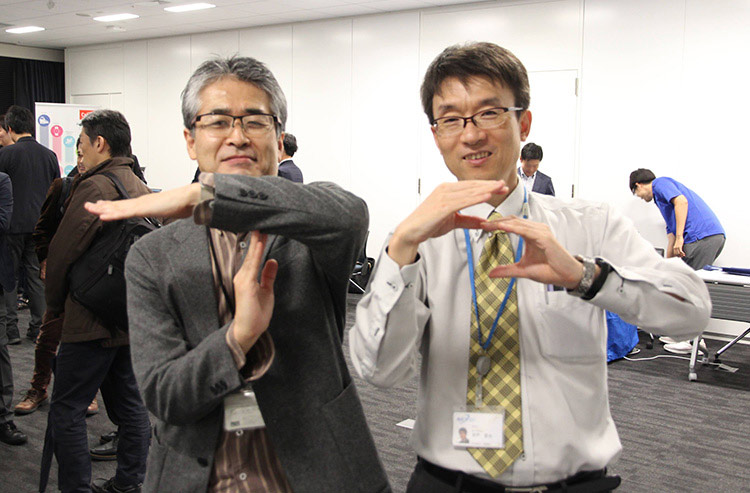
Bunji Yamamoto of Internet Initiative Japan Inc. (left) and Tetsuya Ido of NICT making the TimeSync hand sign
In his presentation, "High-Precision Time Synchronization Using GNSS and Countermeasures against Its Vulnerabilities," Kunihiko Hashimoto of Furuno Electric provided a detailed analysis of five specific vulnerabilities plaguing GNSS receivers, alongside the advanced solutions engineered to overcome them, all backed by empirical verification data. A summary of his insights follows.
GNSS offers the unparalleled convenience of being accessible to "anyone, anywhere, anytime, free of charge." Paradoxically, this very architecture is directly tied to its inherent vulnerabilities. The open nature of its signal specifications leaves it exposed to spoofing, while its weak signal strength makes it highly susceptible to jamming and RF interference. Mr. Hashimoto classified these threats into three broad categories—environmental factors, interference, and spoofing—and detailed targeted countermeasures for each.
Countermeasure 1: DSS (Dynamic Satellite Selection™) Technology to Mitigate Multipath Effects
In urban canyons and mountainous terrain, signal reflections bouncing off buildings or topography before reaching a receiver—a phenomenon known as multipath—can severely degrade performance. In verification testing conducted at NTT laboratories, numerous commercially available GNSS receivers failed to meet the rigorous standards required for high-precision time synchronization under multipath conditions.
To overcome this hurdle, Furuno Electric and NTT jointly developed DSS (Dynamic Satellite Selection™). This technology dynamically identifies and excludes degraded satellite signals from positioning calculations, such as poor-quality NLOS (Non-Line-of-Sight) signals consisting solely of reflected waves. By deliberately relying on a "select few" high-quality satellite signals, DSS slashes time synchronization errors under multipath conditions to approximately one-fifth of previous levels, successfully clearing the required benchmarks.
Countermeasure 2: Advanced Antenna Technology to Deflect RF Interference and Coexist with Base Stations
Another critical challenge for GNSS receivers is RF interference when co-located with mobile network base stations, such as LTE installations. Mr. Hashimoto presented comparative verification data from Ritsumeikan University, where a standard, unprotected GNSS antenna and Furuno's latest interference-resistant antenna, the AU-500, were deployed side by side near a base station. While the unprotected antenna repeatedly lost signal lock, the AU-500 maintained seamless, stable reception. The empirical data underscored the vital importance of antenna selection, which serves as the ultimate "gateway" to timing infrastructure.
Countermeasure 3: DoA (Direction of Arrival) Technology to Detect and Neutralize Spoofing Attacks
To counter malicious spoofing, Mr. Hashimoto introduced DoA (Direction of Arrival) technology, which precisely detects the incoming angle of radio waves. Utilizing a multi-element array antenna, this system determines whether signals originate from overhead satellites or from the ground, where a terrestrial attacker would be located.
He presented empirical results from DoA verification testing, explaining that empowering a receiver to definitively identify when it is under attack prevents the propagation of corrupted timing data and safeguards service quality.
In his closing remarks, Mr. Hashimoto proposed a paradigm shift for future architecture: moving away from a sole reliance on GNSS toward a resilient "GNSS + Alternative" ecosystem that integrates terrestrial networks, LEO (low Earth orbit) satellites, and atomic clocks. Furthermore, he advocated that rather than persisting through severe interference, implementing a "protective PPS (Pulse Per Second) shutdown"—instantly ceasing output upon attack detection—will be central to robust resilience. In this next generation of timing infrastructure, he argued, the ability to accurately detect attacks and failures will transition from a premium feature to an indispensable function.
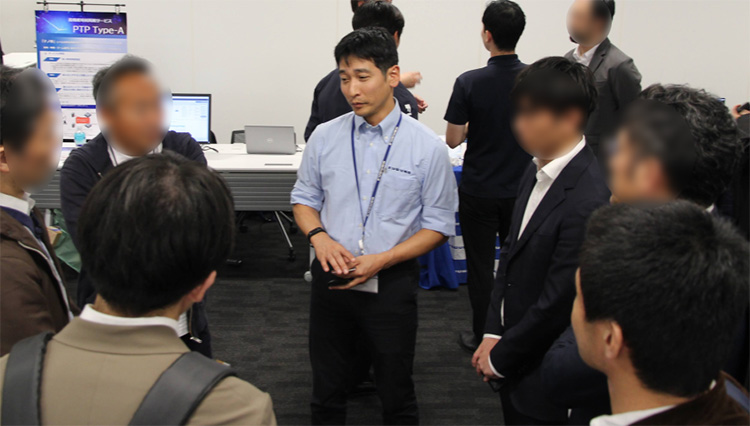
Kunihiko Hashimoto of Furuno Electric fielding a barrage of questions from the engaged audience.

Born in Ishikawa Prefecture in 1964. Based on his experience in covering industrial technology, cutting-edge technology, and space development, he is passionate about unraveling and conveying difficult topics in an interesting way to people of all ages, from children to senior citizens. From 2009 to 2014, he was a member of the editorial board of "JAXA's," the official magazine of the Japan Aerospace Exploration Agency. Author and co-author of the following books: 『あなたにもミエル化? ~世間のなりたちを工学の視点から~』(幻冬舎mc)、『私たちの「はやぶさ」その時管制室で、彼らは何を思い、どう動いたか』(毎日新聞社)、『東京大学第二工学部70周年記念誌 工学の曙を支えた技術者達』(東京大学生産技術研究所) etc.,
_1.jpg)
_1.jpg)
_1.jpg)
_1.jpg)
_1.jpg)