
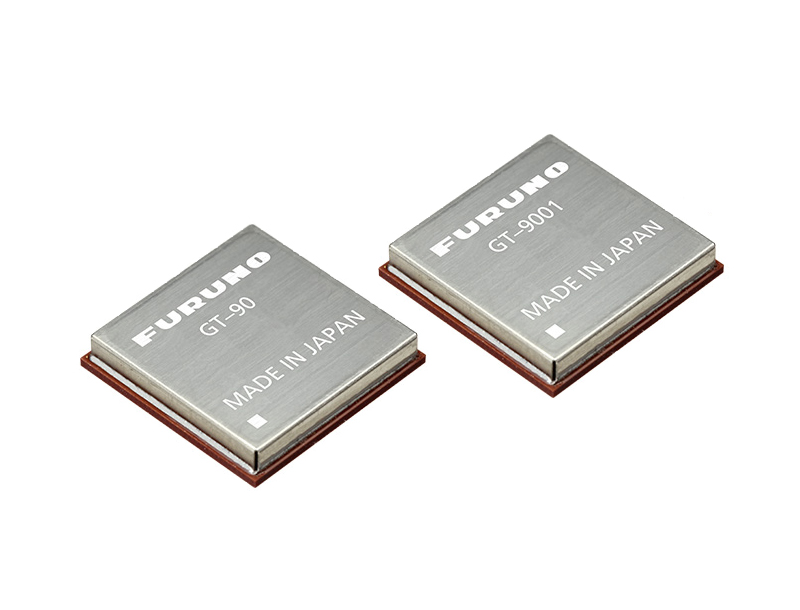
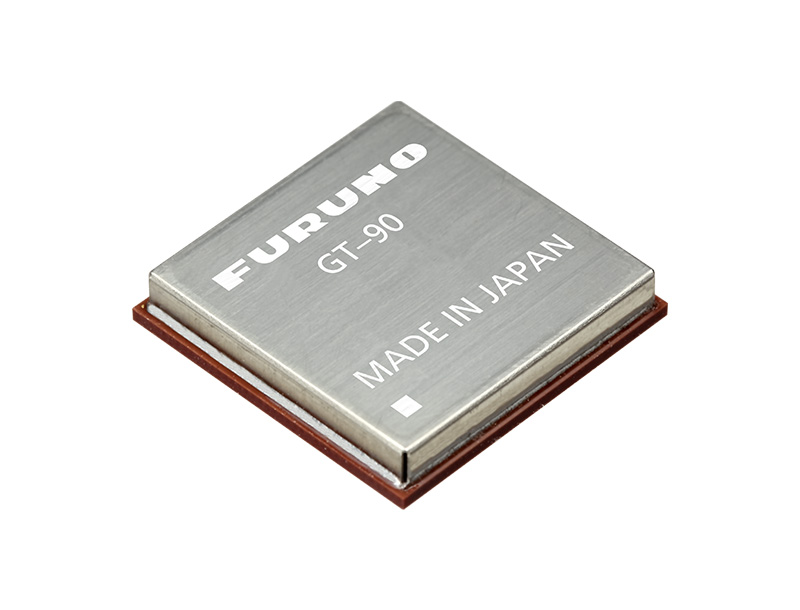
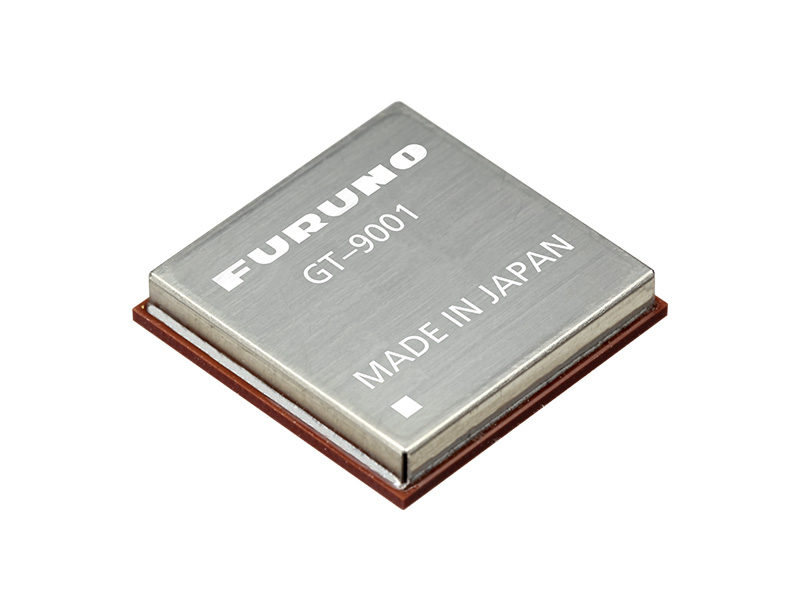
- GNSS for Time Sync
Timing Multi-GNSS Receiver Module
Model
GT-90/GT-9001
- NEW
Achieves the world's highest stability, less than 4.5 ns (1σ), under open-sky conditions, with a L1 single band receiver
A next-generation GNSS receiver module for time synchronization, compatible with all global GNSS systems. They support widely used L1 antennas, making it ideal for cost-sensitive applications and seamless upgrades from existing systems. GT-9001 offers three outputs: high-stability 1PPS and customizable clock signals. GT-90 is a basic model providing only high-stabiliy 1PPS. Both models achieve timing stability under 4.5 ns (1σ), rivaling multi-band receivers. Equipped with NTT's anti-multipath algorithm, "Dynamic Satellite Selection™", they minimize timing degradation even when GNSS antennas are placed near windows or in urban environments.
- GNSS (Timing, Automotive/Industrial)
Features
Support major global GNSS constellations
They support GPS, GLONASS, Galileo, BeiDou, QZSS and SBAS systems worldwide.
Users can select specific satellite constellations or utilize all simultaneously, making it ideal for globally deployed applications such as 5G mobile base stations, as well as for robust infrastructure needs in broadcasting, power, and finance.
Deliver clock outputs and 1PPS synchronized with UTC
They deliver high-resolution, UTC-synchronized 1PPS timing signals.
GT-9001 also supports clock output, with three configurable outputs assignable to 1PPS or clock signals.
It directly generates essential frequencies such as 10 MHz, 2.048 MHz, 19.2 MHz, and 30.72 MHz, commonly used in wireless communications.
This flexibility helps shorten time-to-market and enhances your product’s competitiveness.
The world's highest level of stability of less than 4.5ns (1σ) under open sky
By enhancing carrier smoothing and optimizing positioning calculations across satellites, these L1 single band receivers achieve timing stability comparable to multi-band receivers. It incorporates an industry-leading positioning algorithm specifically designed for GNSS time synchronization applications.
Compliant with G.8272 PRTC-A and PRTC-B
Compliant with TDEV (Time Deviation) /MTIE (Max Time Interval Error).
Exceeds the most stringent requirements in 5G networks.
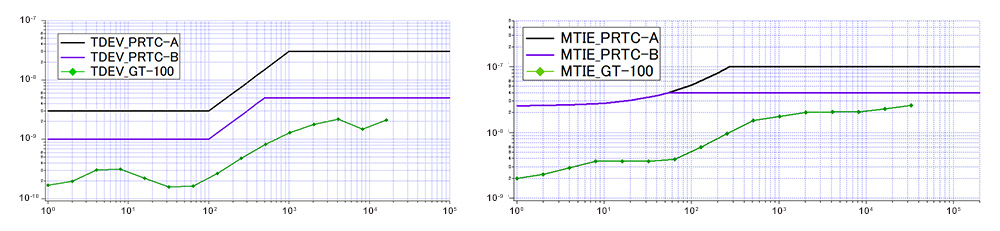
The above results show the timing performance when operating GT-100 using only L1 band. GT-90/9001 offers the same high level of performance.
World's lowest accuracy degradation in harsh urban multipath environments
GNSS timing receivers are increasingly being used in urban environments.
With the technology, "Dynamic Satellite Selection™*", which intelligently selects high-quality satellite signals, timing performance degradation is minimized even in urban areas where multipath signals are present.
This ensures reliable operation even when installed at base stations in cities.
- Multipath resistance technology based on an algorithm developed by NTT
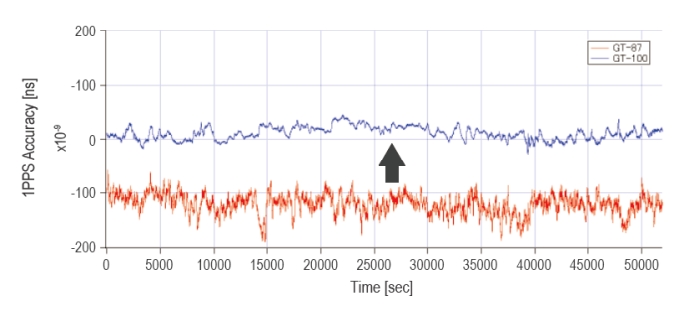
The above results show the timing performance when operating GT-100 using only L1 band. GT-90/9001 offers the same high level of performance.
Anti-Jamming, Anti-Spoofing
The modules mitigate the effects of jamming signals automatically and to provide real-time notification to the user of the jamming signal frequency and signal strength.
They enhance receiver security and identify the source of jamming during the operational phase of a customer's system.
They also implement a detailed algorithm to verify the correctness of GNSS signals and can detect and eliminate spurious signals that are not broadcast from the satellites.
Authentication feature (OSNMA/QZNMA)
Authentication messages from Galileo (European GNSS) and QZSS (Japan's Quasi-Zenith Satellite System) confirm the authenticity of navigation messages, strengthening resistance to spoofing attacks.
Video: What is OSNMA/QZNMA?
Short term holdover (GT-9001)
Interruption of GNSS satellite signals is a major concern during operation of critical infrastructure systems.
GT-9001 supports short term holdover, which maintains constant performance even if GNSS satellite signals are interrupted for a short period of time.
External clock input (GT-9001)
Interruption of GNSS satellite signals is a major concern during operation of critical infrastructure systems.
GT-9001 supports short term holdover, which maintains constant performance even if GNSS satellite signals are interrupted for a short period of time.
Carrier Grade Quality, Suitable for critical infrastructure applications
Compared to conventional GNSS receivers for time synchronization, Furuno's new GNSS receivers are substantially more robust (i.e., they are not affected by most disruptions and thus ensure continuous service).
Such enhanced features give users a high level of confidence in fields that require high reliability, such as 5G mobile base stations, financial transactions, and power grids.
Sophisticated built-in security
Including secure boot and secure firmware update ensures maximum protection against tampering.
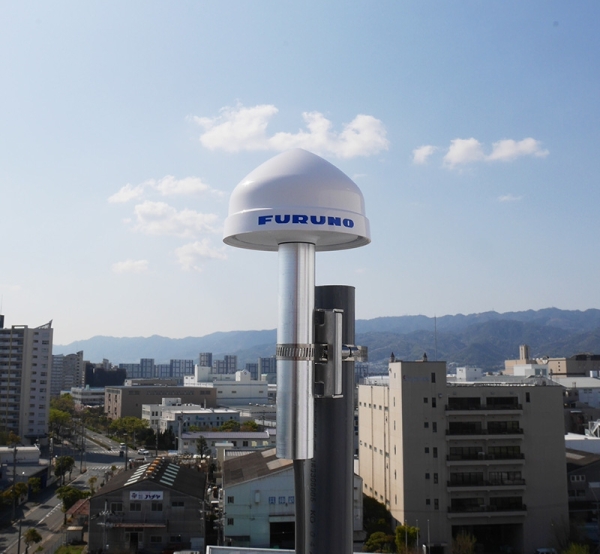
Enhance performance in combination with recommended antenna
AU-300 Multi-GNSS Timing Antenna delivers both high stability and high robustness.
Three product models available in the same form factor
Model | Frequency band | Output | Short term | External clock input | |
1PPS | Clock | ||||
L1 / L5 | ○ | ○ | ○ | ○ | |
GT-9001 | L1 | ○ | ○ | ○ | ○ |
GT-90 | L1 | ○ | - | - | - |
Specifications
General
GNSS Reception Capability
GPS L1C/A, GLONASS L1OF, Galileo E1B/E1C,BeiDou B1I /B1C, QZSS L1C/A, SBAS L1C/A
GNSS Reception
32 channels
Sensitivity
Acquisition: >= -148 dBm
Tracking: >= -163 dBm
*Measurement environment using GNSS simulator
ITU-T Recommendation
Compliant with G.8272 PRTC-A and PRTC-B
*Compliant with TDEV (Time Deviation) /MTIE (Max Time Interval Error)
1PPS Stability
< 4.5 ns (1σ)
*Open sky
1PPS Accuracy
< ± 40 ns (vs UTC)
*Open sky
1PPS Resolution
< ± 0.2 ns
Clock Output
[GT-9001 only]
1 MHz to 40 MHz
Stability : < 0.5 ppb (1σ)
Short Term Stability (Root Allan variance ( =1s)) : < 5 × 10⁻¹⁰
Long Term Stability (24h average) : < ± 1 × 10⁻¹²
TTFF (Typical)
Hot Start: 2 sec(Typ)
Cold Start: 35 sec(Typ)
*Measurement platform with recommended active antenna
Supply Voltage
3.3 VDC
Current Consumption
55 mA
*Tracking Satellite outdoor
Operating Temperature
-40°C to +85°C
Package
47Pin LCC(Leadless Chip Carrier)
18.0mm × 17.8mm × 3.11mm
Protocol
PFEC (NMEA 0183 Standard Ver 4.11)
Option: RTCM10403.3, RINEX4.1, binary
Security
Secure boot, Secure FW update
Interfaces
[GT-90 and GT-9001]
UART, GPIO, Time pulse (1PPS)
[GT-9001 only]
Clock, External clock input
Functions
[GT-90 and GT-9001]
Anti-Jamming (8CW), Multipath Mitigation (Dynamic Satellite Selection™), Anti-Spoofing, T-RAIM, Antenna Detection Circuit, TAI output
[GT-9001 only]
Holdover
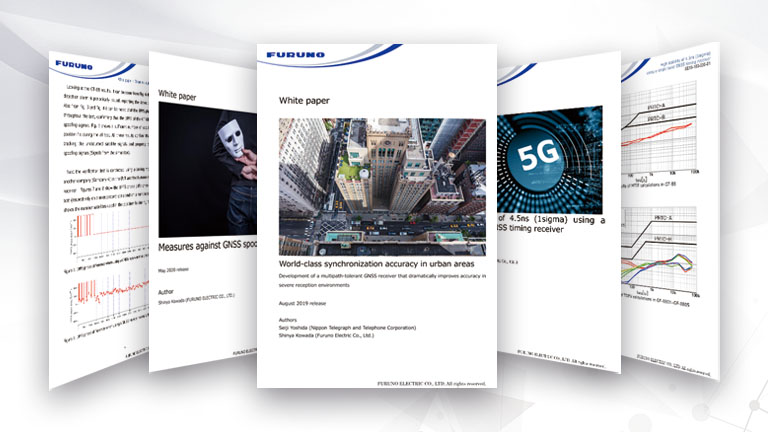
White Papers
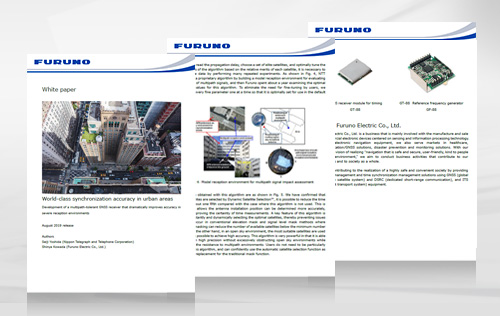
Countermeasure for GNSS receiver failure
Our engineer specializing in time synchronization explains, with charts and diagrams, the countermeasures to be taken on the receiver side against typical GNSS-related problems such as “multipath, "jamming", "spoofing", and interruption of GNSS signal reception, the degree of effectiveness, and how to select a GNSS product.
If this is your first time considering a GNSS receiver, please have a look through these papers.
You can download all five together with the white paper “High Stability of 4.5ns (1 sigma) using a single band GNSS timing receiver”.
The Latest in GNSS Spoofing Countermeasures: How to Use OSNMA and QZNMA
In this white paper, a FURUNO engineer specializing in GNSS timing explains how OSNMA and QZNMA should be used in real-world applications, with practical insights provided in about 20 pages.
"What GNSS spoofing is and why it matters today"
"Key concepts of OSNMA and QZNMA"
"Operational considerations"
"How to use authentication functions in FURUNO GNSS receivers"
Dual Band GNSS Receivers: Safeguarding Critical Infrastructure
What are the advantages of a dual-band frequency receiver in time synchronization applications where service outages are not tolerated?
Our engineer specializing in time synchronization explains the following in over 20 pages.
"Why is now the right time to move to dual-band?"
"Robustness by dual-band receiver"
"Outstanding features of GT-100"
Terms
FURUNO defines as the following.
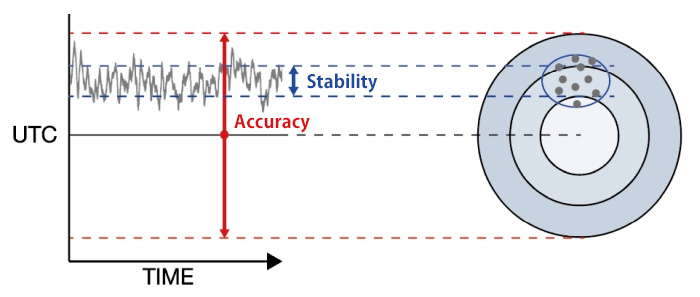
1PPS Accuracy and 1PPS Stability
1PPS Accuracy: Measure of how far away from the true value (UTC: Coordinated Universal Time)
1PPS Stability: Measure of the variation in accuracy over a period of time
- Please note that some literature confuses stability with accuracy.
Robustness and Resiliency
Robustness: Enables continuous service without being affected by undesirable attacks on GNSS reception.
Resiliency: Defines the capacity of the device to recover and restore quickly from interruptions that may occur.
Evaluation Kit
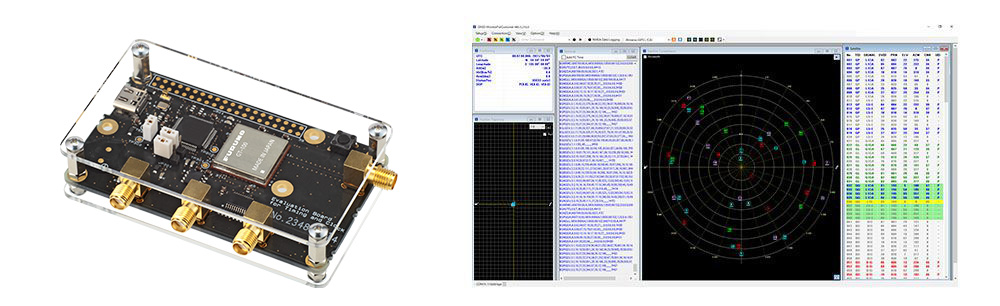
Evaluation kit for GT-90/9001.
The Evaluation Kit can supply power and communicate with USB interface.
FEATURES
5VDC Power supply through USB bus power
Serial communication through USB
1PPS/Clock output from the SMA connectors
SMA antenna connection
Outer size is (w) 86mm x (D) 51mm x (H) 21mm
Weight is about 65g
Accessories are USB cable and Multi-GNSS Antenna
Quote Request

Please fill out the quote form and our staffs will respond to you shortly.
This is a quote form only for GNSS receivers for time synchronization.
For other contents, please contact us using the respective inquiry form.
Downloads
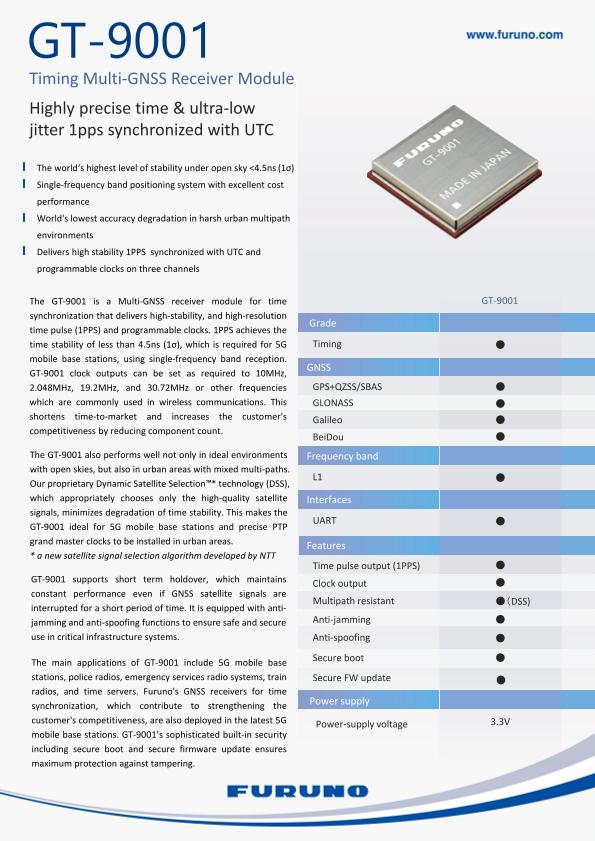
| Name | Last update |
|---|---|
| Nov 8, 2024 | |
| Jan 19, 2026 | |
| Jan 20, 2026 | |
| Jan 15, 2026 | |
| Jan 15, 2026 | |
| Aug 26, 2026 | |
| Aug 1, 2024 |
| Name | Remarks |
|---|---|
|
【System requirements】 |
| Name | Remarks |
|---|---|
|
Download Form |
|
|
Download Form |
|
|
|
|
|
Download Form |
|
|
|
|
|
Download Form |
|
|
|
|
|
Download Form |
|
|
|
Inquiries about GNSS Products
- Specifications subject to change without notice.
GNSS for Time Sync Product List
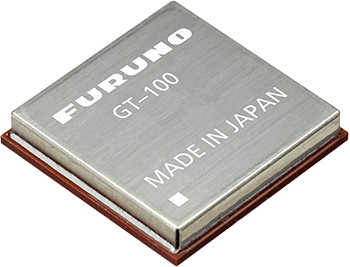
Timing Multi-GNSS Receiver Module
Model
GT-100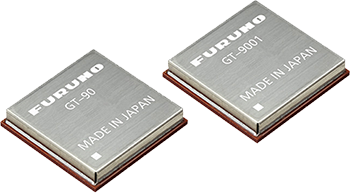
Timing Multi-GNSS Receiver Module
Model
GT-90/GT-9001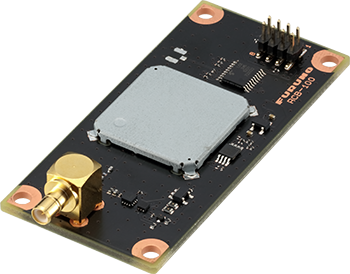
Timing Multi-GNSS Receiver Carrier Board
Model
RCB-100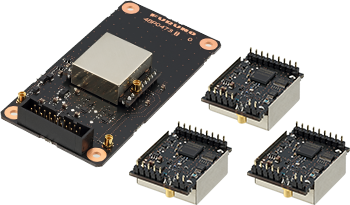
Dual-Band GNSS Disciplined Oscillator
Model
GF-102/103/104/105G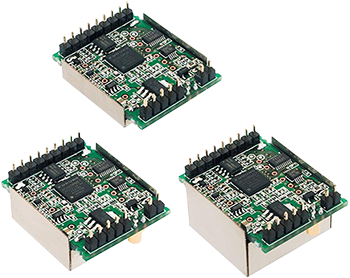
Multi-GNSS Disciplined Oscillator
Model
GF-8801/02/03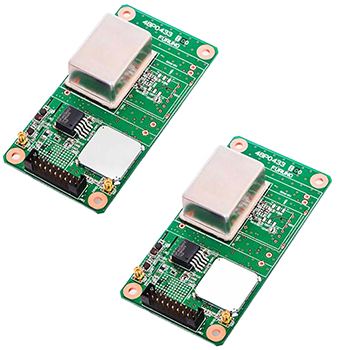
Multi-GNSS Disciplined Oscillator
Model
GF-8804/05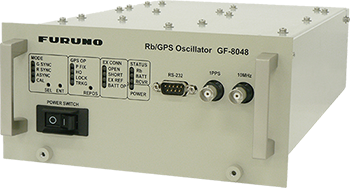
GPS Disciplined Oscillator
Model
GF-8048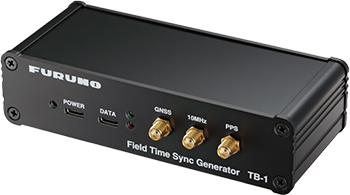
Field Time Sync Generator
Model
TB-1There are no products that meet the conditions.
GNSS for Time Sync
Timing Multi-GNSS Receiver Module GT-100
Timing Multi-GNSS Receiver Module GT-90/GT-9001
Timing Multi-GNSS Receiver Carrier Board RCB-100
Dual-Band GNSS Disciplined Oscillator GF-102/103/104/105G
Multi-GNSS Disciplined Oscillatorv GF-8801/02/03
Multi-GNSS Disciplined Oscillator GF-8804/05
GPS Disciplined Oscillator GF-8048
Field Time Sync Generator TB-1
GNSS for Automotive & Industrial