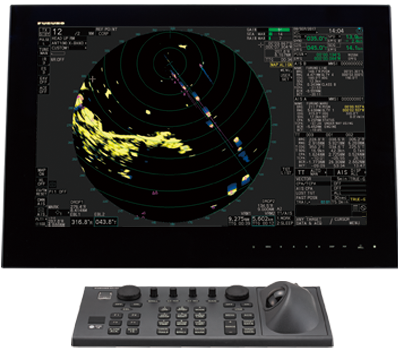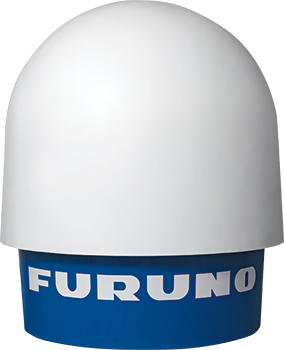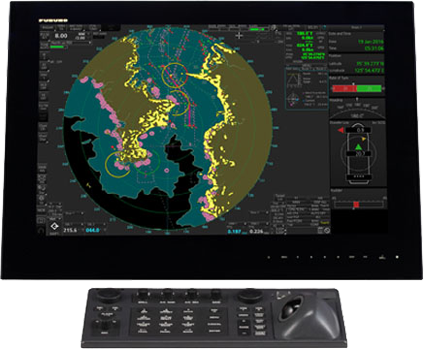
Chart Radar
Model
FAR-30x5 series


In order to safeguard ocean voyages, and the health and well-being of our environment, we have applied our technological expertise in Radar technology to various other useful applications.
In addition to delivering sophisticated Radar applications, such as Ice Radar and Oil Radar, and in order to detect specific material, Furuno is combining our sophisticated Radar technologies with other specialized equipment, so that more complex solutions can be developed, and many problems can be solved.
Historically, ships at sea have been equipped with Radars that use magnetrons to generate radio waves. More recently, the global focus is on Solid State technology, Radars using solid elements such as semiconductors to generate radio waves. Furuno's development of Solid State technology and the initiation of its practical use has brought about even more unique features, with the promise to deliver even more useful and ground-breaking solutions.
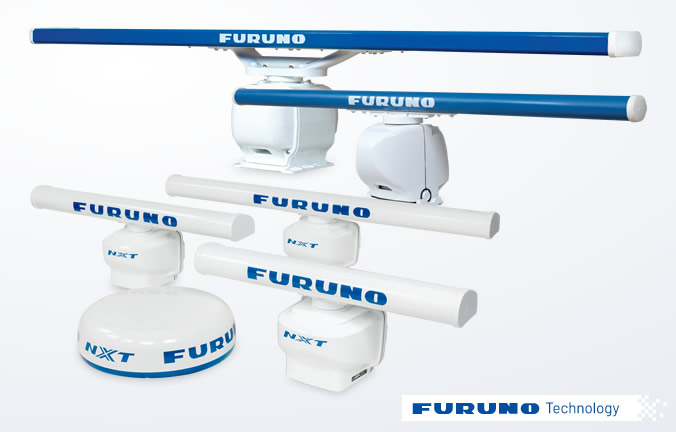
Solid-State Radars Antennas
Because a magnetron deteriorates with time and use, periodic replacement becomes necessary. The elements used in Solid State Radars do not deteriorate, and so the cost in parts and labor for maintenance over time is greatly reduced. For applications requiring continuous Radar operation, such as for large merchant ships and onshore monitoring stations, Solid State Radar provides the best solution to maintenance issues, and its use is expected to become even more prevalent in the future.
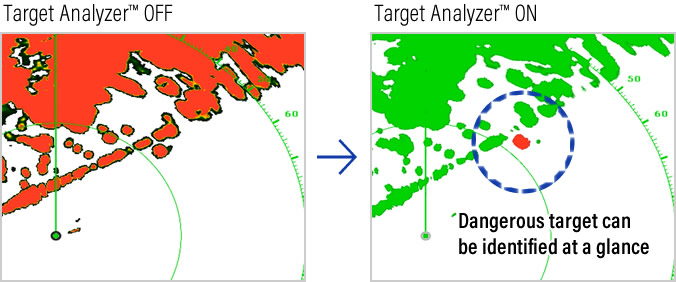
Video of the DRS4D-NXT Solid State Radar screen as displayed on the NavNet TZtouch 2
In Solid-State Radars, the clean, unmodulated signal can be processed using the principles of the Doppler effect, detecting any difference in frequency or wavelength. In this manner, Furuno Solid State Radars can perform advanced target detection that includes accurate information about the direction and velocity of moving targets.
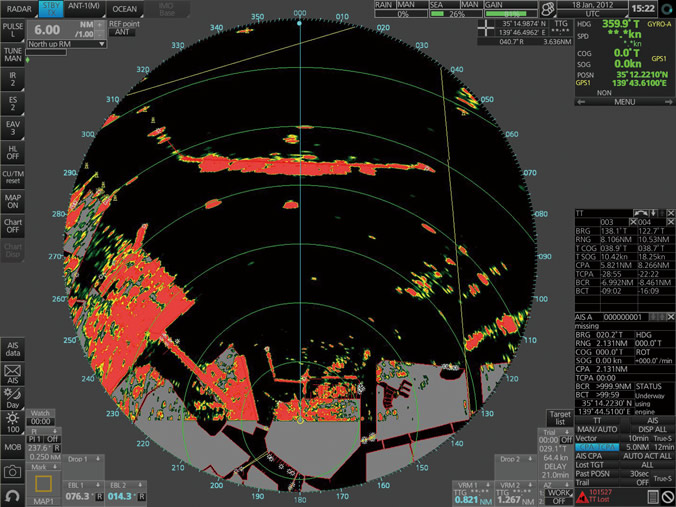
Solid-State Radar Example Images
Unlike the magnetron Radar, which requires variations in transmission frequency, Solid State Radar generates radio waves of a fixed frequency. Subsequently, the frequency band occupied is very small, contributing to efficient use of radio waves.
To meet a growing demand for the detection of specific objects, such as cracks in sea ice or oil slicks, we strive to make the best use of the technological potential of our Radars in order to display echoes in an easy-to-understand way.
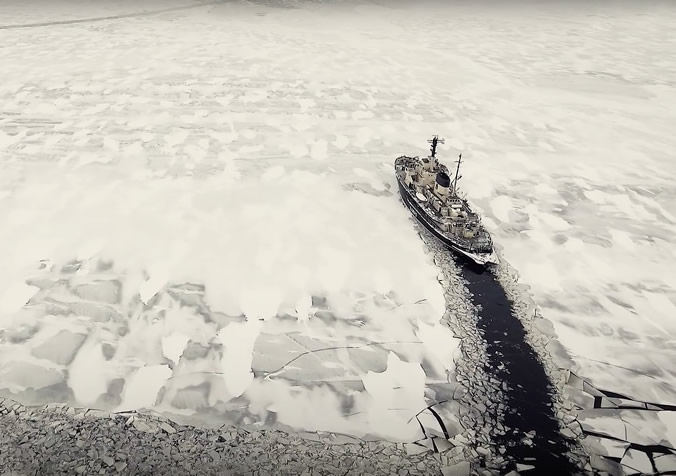
Ship sailing through ice
During a voyage in the North Pole, where the sea surface is covered with ice, icebreaker and ice-class vessels with high ice resistance are crucial. In order for these vessels to navigate safely and efficiently, it is important to find a route through the thinnest ice. This is how our Ice radar was born - a true Navigation Radar that makes ice cracks more visible than ever.
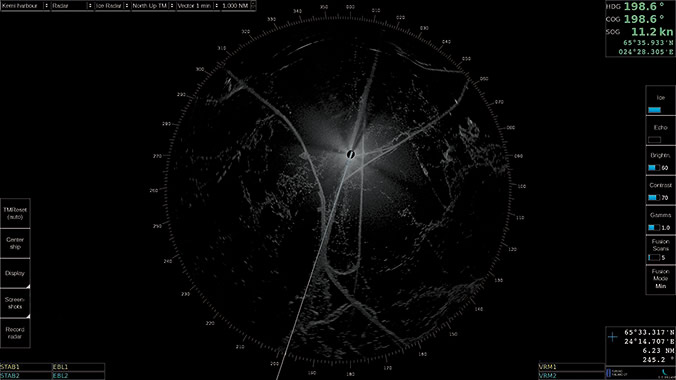
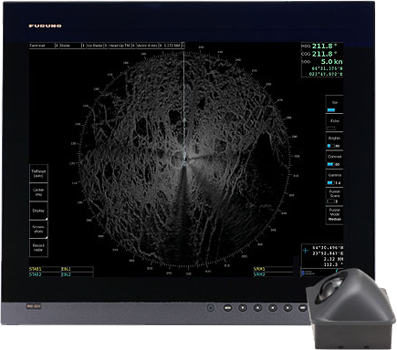
Ice Radar Screen Shot
According to the principle of refractivity, when they reach the surface of the unbroken ice, radio waves tend to be sent back towards the antenna which emitted the wave, and the reflected signal is weak. Conversely, when the ice is cracked and the surface non-uniform, radio waves will tend to be scattered, and the signal will appear stronger.
Furuno Ice Radar is designed to display with precision the echo of radio waves reflected from the broken parts of the ice, allowing quick and intuitive appraisal of the best possible routes. Simultaneously, Furuno's signal processing allows the same Radar to be used for Navigation.
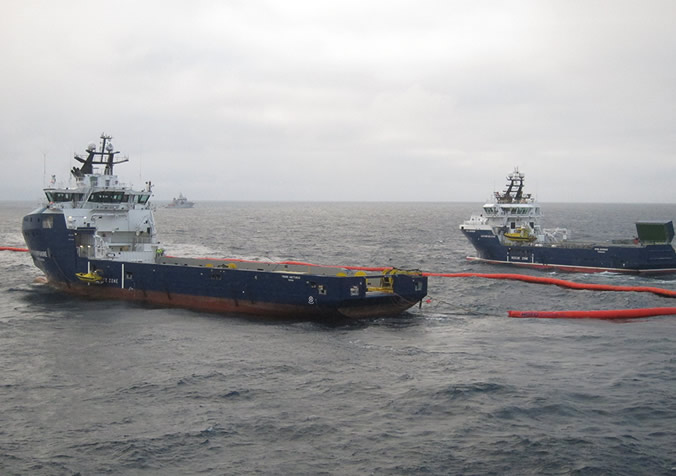
Oil spills recovery
Oil Radar was developed with the aim of contributing to the protection of the environment and marine life by detecting oil spills on the sea surface.
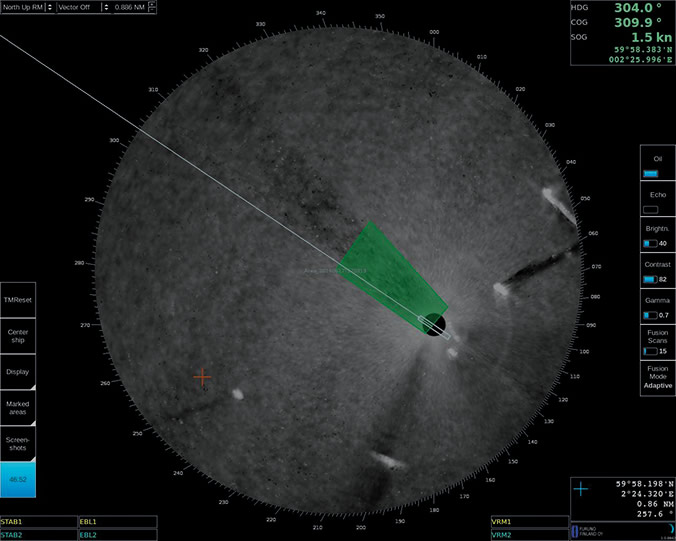
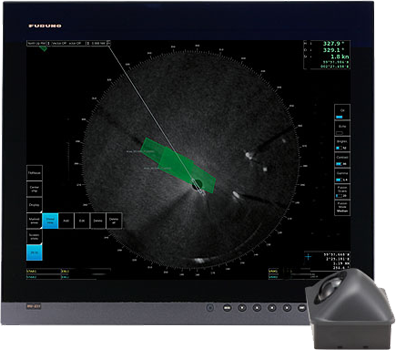
Oil Radar Screen Shot
The intensity of a reflected wave depends upon the height of the wave. Since oil is more viscous than sea water, a surface covered with oil makes it harder for that surface to properly reflect radio waves. As a result, Radar returns appear weaker. Furuno Oil Radars utilize a unique algorithm designed to display these areas in an easy-to-understand manner.
Surfaces covered by oil spills are identified and shown on the monitor automatically.
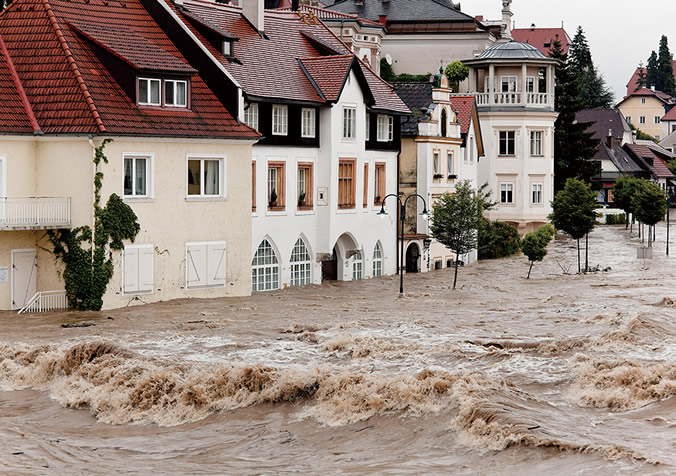
Damage due to concentrated torrential rain (image)
As the world asks the question, "How can we better protect ourselves against localized weather phenomena, such as tornadoes and torrential rains?", it is with a great sense of urgency that we find and provide appropriate solutions to predict these phenomena. Furuno, using its expertise in the field of maritime technology, miniaturization, and solid state physics, has developed one of the world's most lightweight and compact Doppler Weather Radars ever.
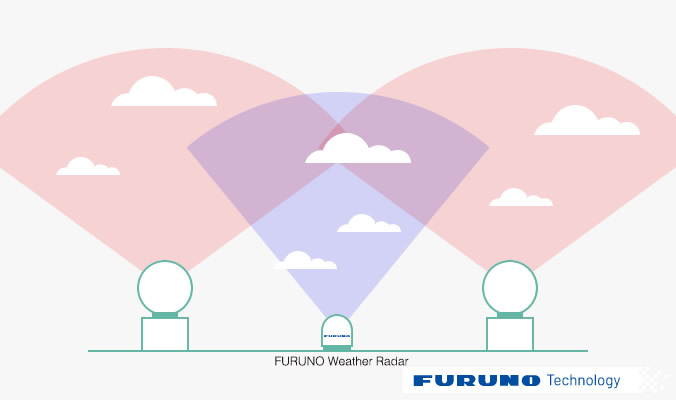
Compact and lightweight radar for optimal supplement of global surveillance Weather Radars.
Unlike conventional, large-scale Weather Radars, FURUNO's compact Weather Radar can be installed in places considered too difficult to access, such as the roof of a tall building, or in mountainous areas.
By early detecting the raindrops inside a cumulonimbus, low level clouds that are too low for large-scale meteorological Radars scanning higher altitudes, we can build more efficient alert systems against torrential rains and tornadoes.
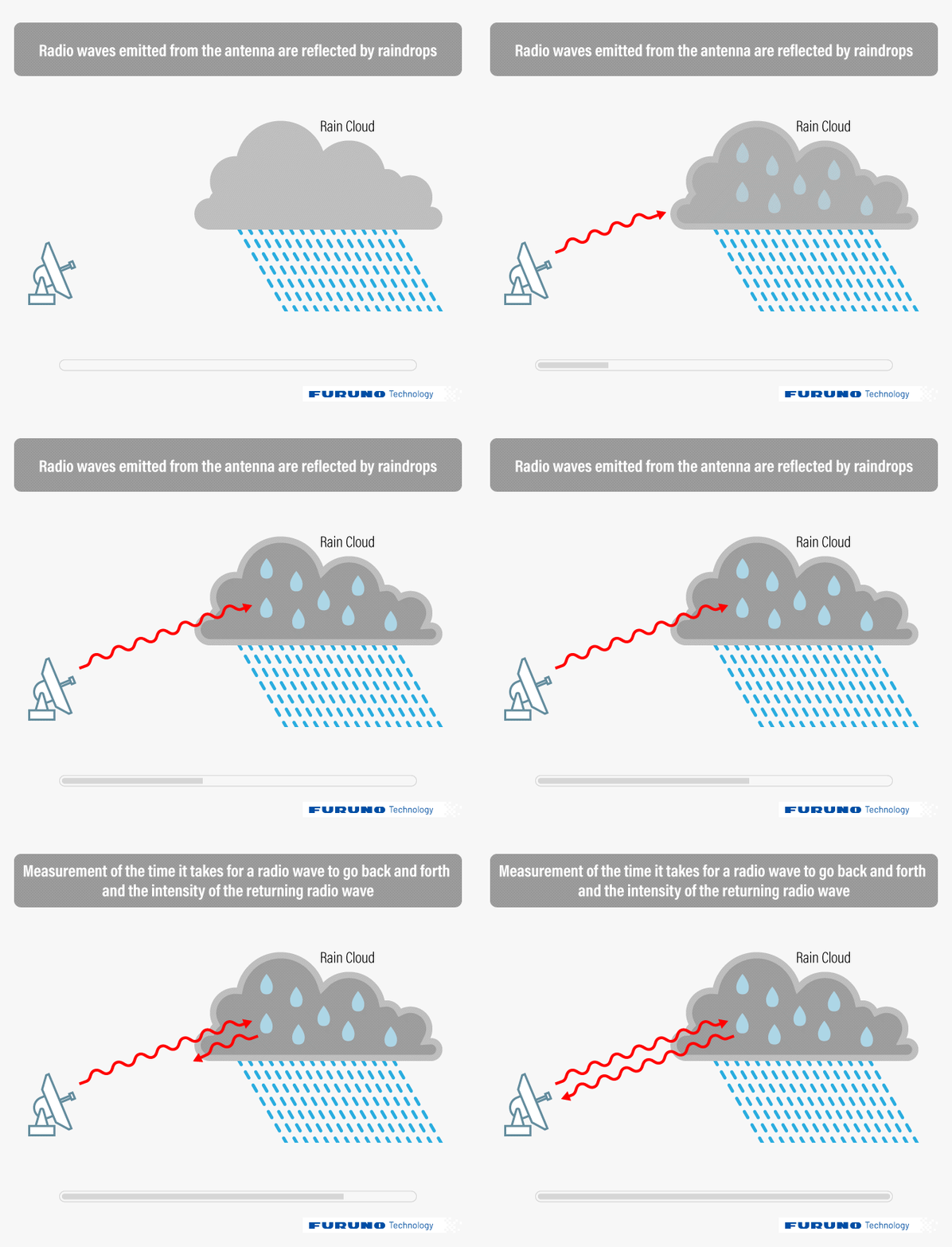
Three-dimensional observation of rain clouds
Weather Radar transmits radio waves to determine the location of rain clouds, and the intensity of rainfall, by measuring the strength of the echo and the time it takes for a reflected wave to return.
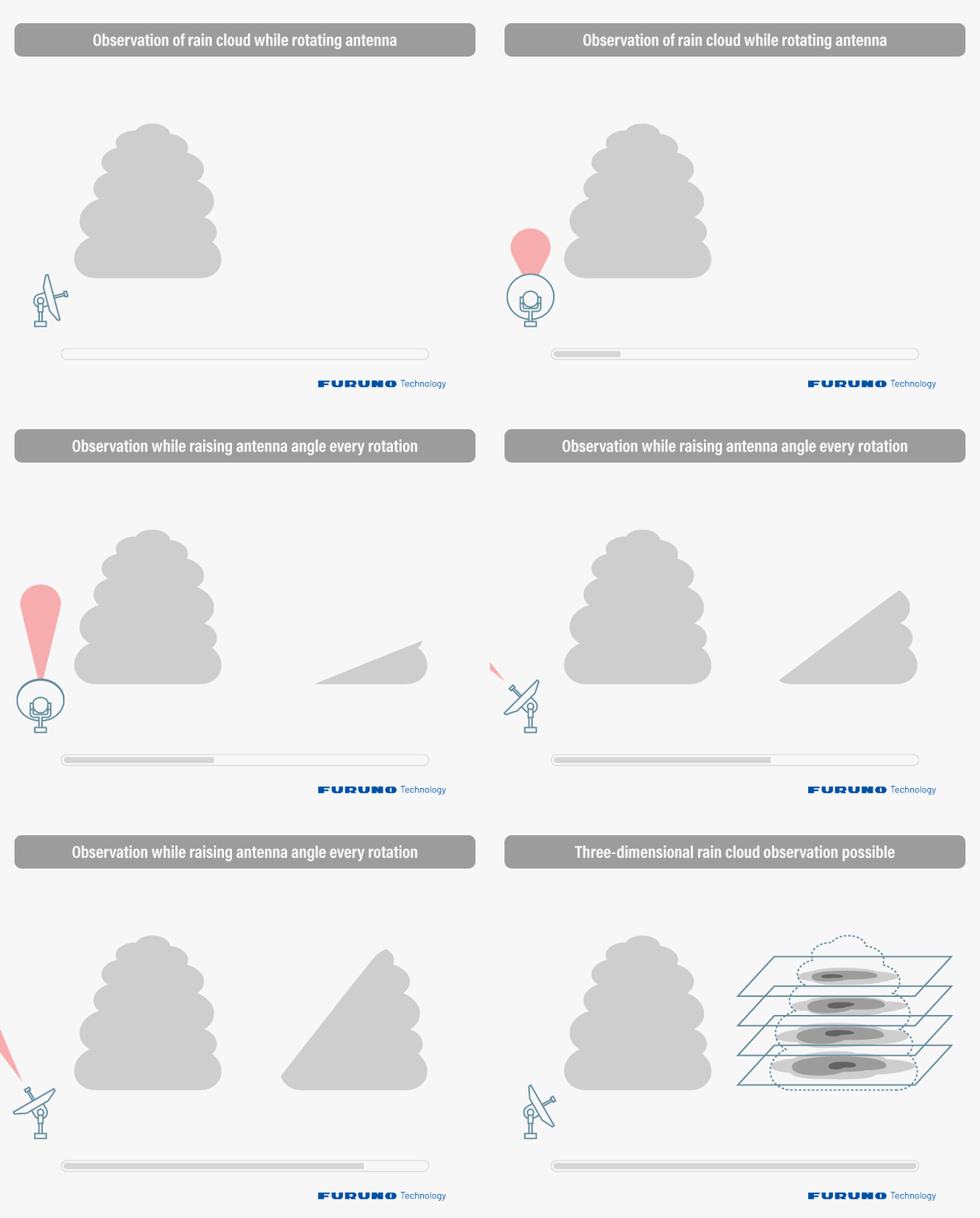
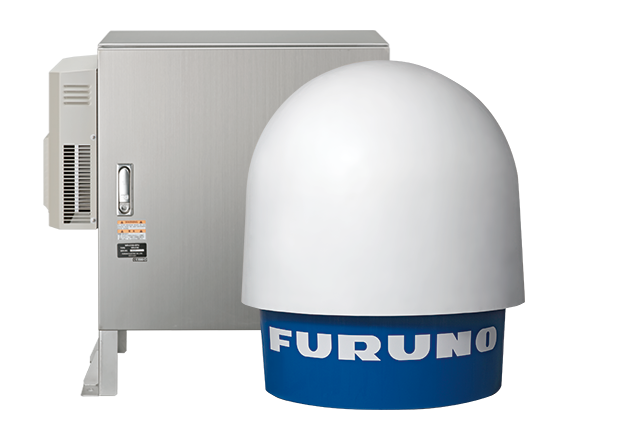
Inside a weather radar antenna
A Furuno Weather Radar rotates inside of a compact dome while transmitting, just like the Radar antennas installed on a ship. Unlike Marine Radar, however, each time a Furuno Weather Radar completes a 360-degree turn, the scanning angle increases so that a three-dimensional observation of the sky can be performed.
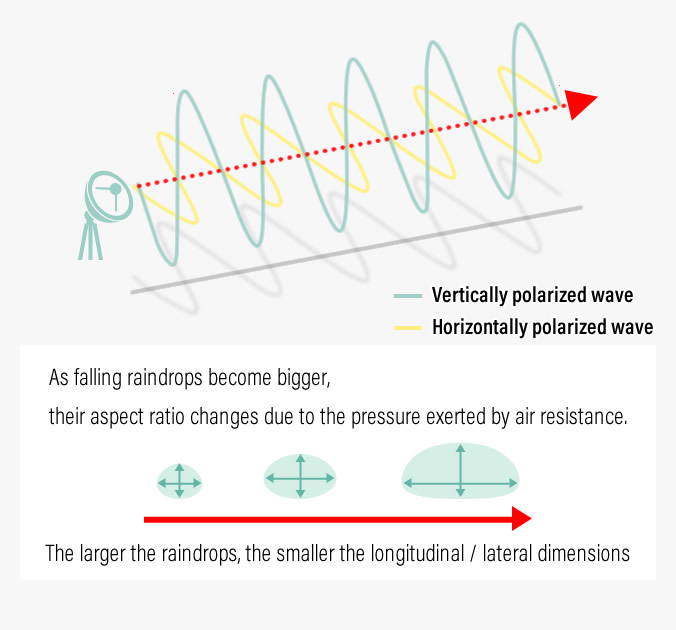
Measurement using dual polarization
A single Polarimetric Doppler Weather Radar uses only horizontally polarized waves, while a Dual Polarimetric Radar employs both horizontal and vertical waves simultaneously. When using a Dual Polarimetric Doppler Radar, rain intensity can be calculated with greater accuracy.
This calculation can be performed by measuring the size of rain particles in both horizontal and vertical planes. Based on the current scientific knowledge, a raindrop tends to become horizontally distorted as it falls, as the influence of both gravity and atmosphere cause it to form into a long, ellipsoid droplet.
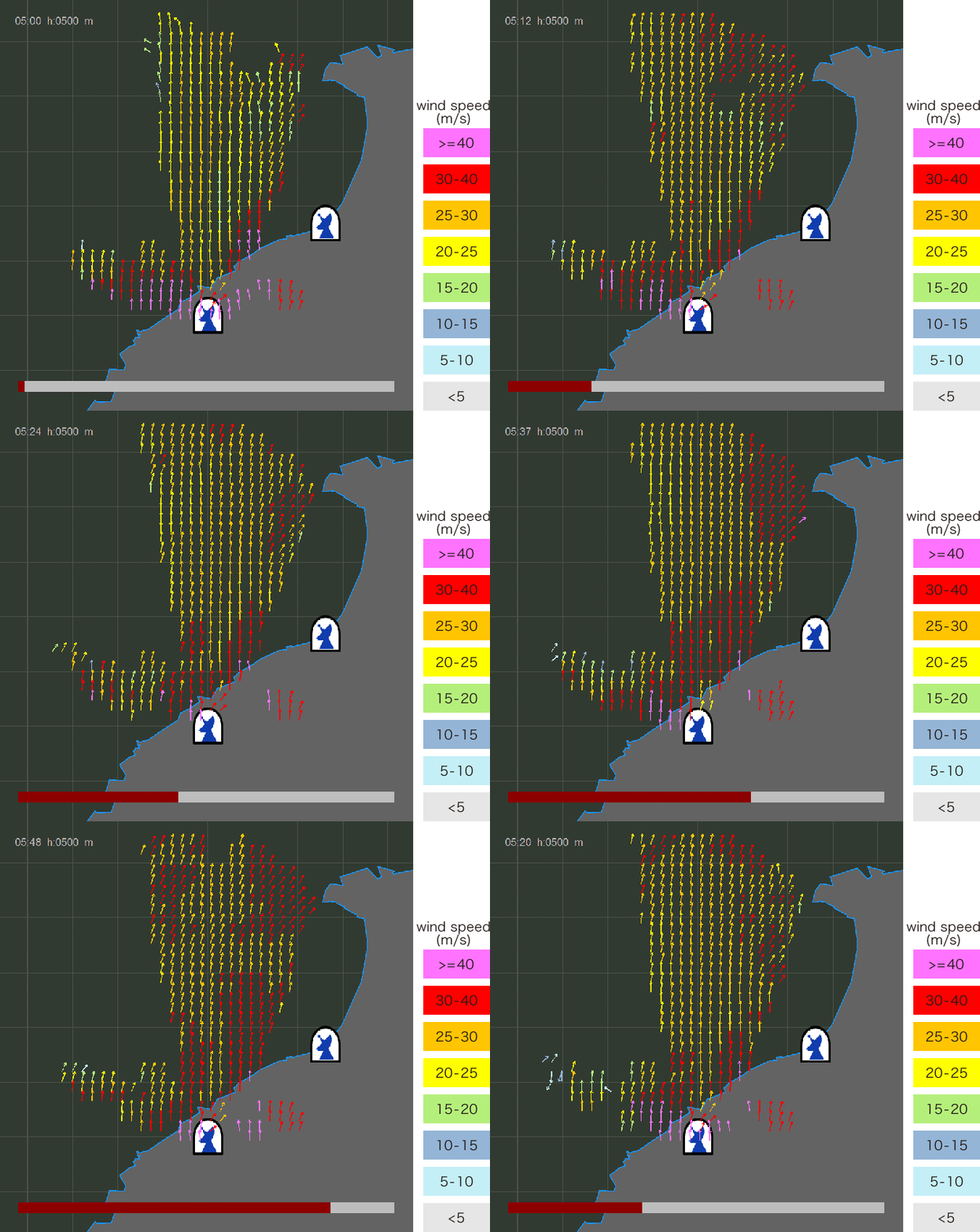
Measure indicating the wind direction of a wind cloud located 500 meters above the sky
Doppler Weather Radar has been developed for the purpose of preventing wind-related damage in areas frequently hit by strong winds and rain. Using the Doppler principle, along with a measurement of wind velocities with multiple radars, it is possible to monitor wind at sea with high spatiotemporal resolution. Because it is difficult to install an anemometer on site, the Doppler principle is utilized to effectively and accurately monitor wind at sea. In addition to displaying changes in wind speed and direction on the display, alarms and e-mail notifications can be sent so it is possible to effect a rapid response in the event of dangerous weather.
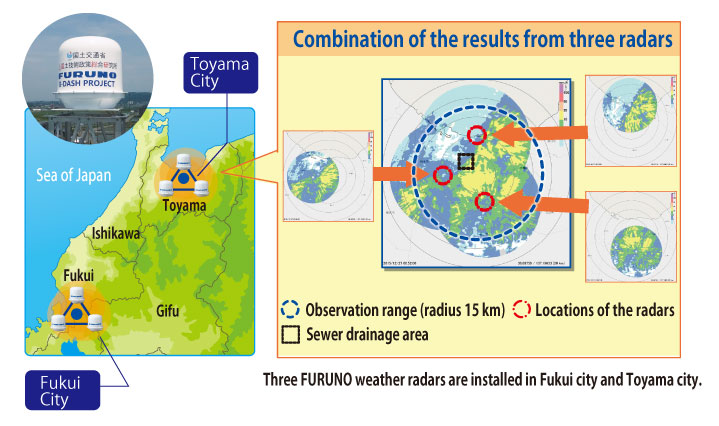
In the Japanese cities of Fukui and Toyama, a Multi-radar system composed of 3 Radars has been installed
1. B-DASH Project*
B-DASH is a joint research project for more efficient rainwater management, with a focus on monitoring heavy rainfalls in urban areas. The experiment has been carried out in the Japanese cities of Fukui and Toyama, where a system composed of three Weather Radars has been utilized. This allows for the early detection of cumulonimbus, and more accurate observation.
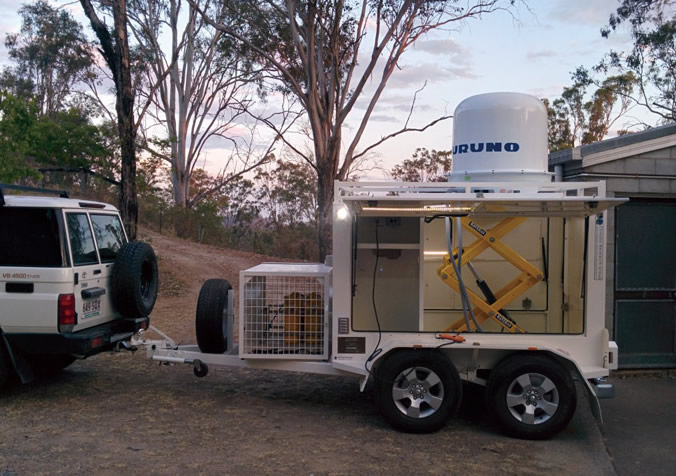
Observation vehicle equipped with weather radar
2. Wildfire observation in Australia
The FURUNO WR-2100 Weather Radar's small size allows it to be mounted on a transportable platform, creating a mobile observation unit that can be easily deployed to any desired location.
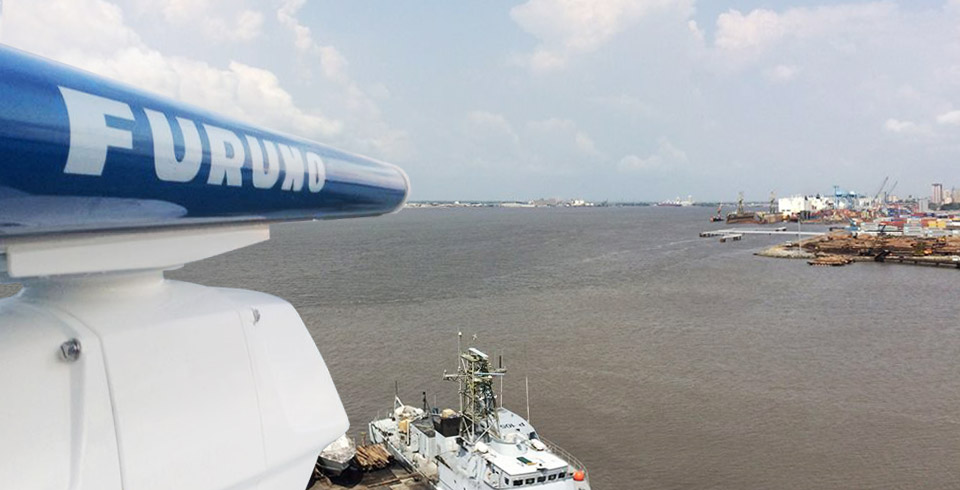
Furuno Radars are used in coastal surveillance system for coastal monitoring. Combined with AIS, cameras and alarm systems, they form a comprehensive system of complex surveillance systems, such as maritime traffic control, power station and farm surveillance, oceanic civil engineering, and other sensitive sites where security is a concern.
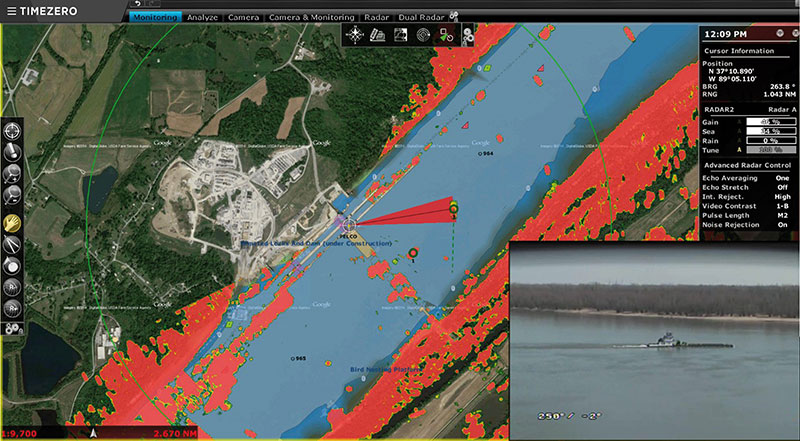
Screen shot of a monitoring terminal
By using a combination of advanced clutter removal functions and our vessel tracking technology, a more precise target tracking solution can be delivered. Moreover, by superimposing AIS and Radar information, different kinds of Radar operation from a single screen can be achieved. FURUNO has leveraged our expertise to support advanced monitoring tasks, such as functions to automatically generate a list of targets, and the enlargement/reduction of selected portions of the screen.

Comprehensive solution offering the best protection to the rig by preventing accidents with out-of-control Vessels, acts of piracy or terrorism and extreme weather conditions which represent major threats to the platform both in safety and maintenance cost.
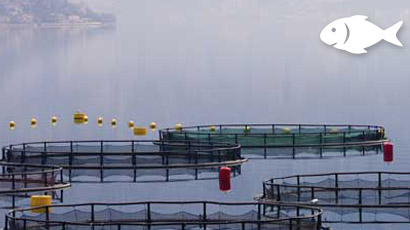
For the safety of employees working on fish farms and particularly at night, for preventing acts of robbery, but also to monitor unknown vessels entering the area and potentially threatening lines and nets.

In ports, the main danger comes from a risk of collision between ships and the traffic needs to be constantly monitored to avoid such unfortunate and deadly accidents. A Safe berthing and an efficient transport of passengers and goods cannot be guaranteed without a reliable monitoring.
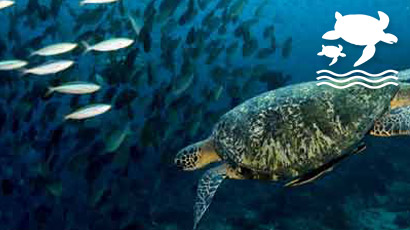
To protect the ecosystem and preserve its fragile balance, it is vital to be equipped to deal with illegal fishing and anchoring and to monitor these areas in an effective manner.

For the protection of coastal facilities and other critical areas that must be placed under strict surveillance to prevent acts of terrorism, to ensure the highest level of security and provide safety for the workers.