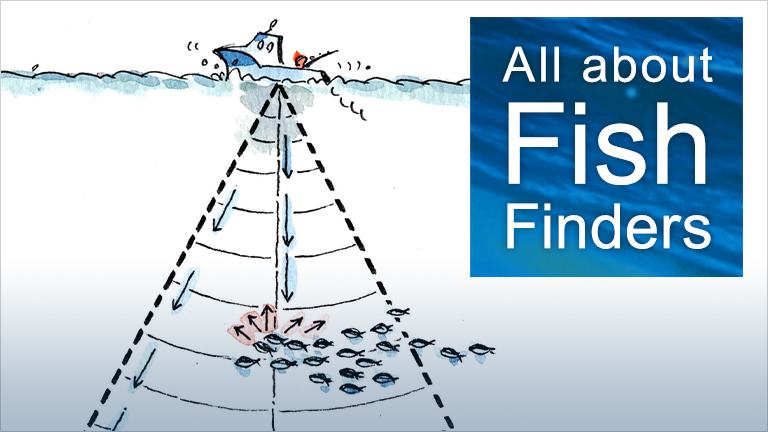
Fish Finders Basics
Exploring the origins of fish finders and the principles behind their technology.

Optimize your fishing operation with Multi-direction detection and Split-beam technology
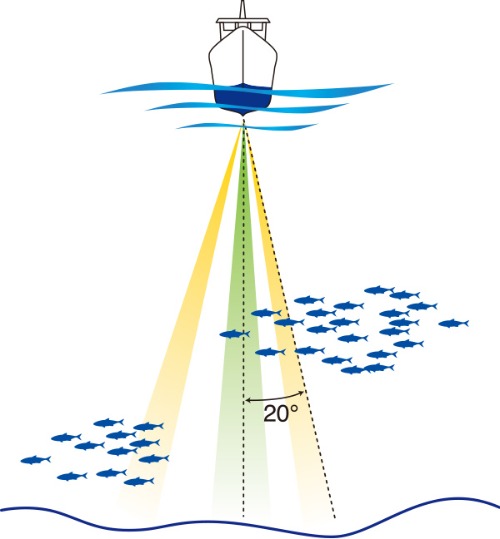
The FCV-38 can detect school of fish in five directions at once and provides information on the location of the targeted fish in relation to the vessel. The operator can adjust the five beams in any direction within a 20 degree range in the menu settings.
For five beam transmission, you can freely activate or deactivate simultaneous transmission and adapt it to your needs by using three types of split-beam mode* in the setting menu: Alternating transmission, Semi-simultaneous and simultaneous transmission.
Semi-simultaneous transmission is new function which limits beam-to-beam interference and makes the seabed easier to identify than with the simultaneous beam transmission mode.
The timing of the transmission has been optimised to accelerate the transmission cycle of the beam even with 5 beams.
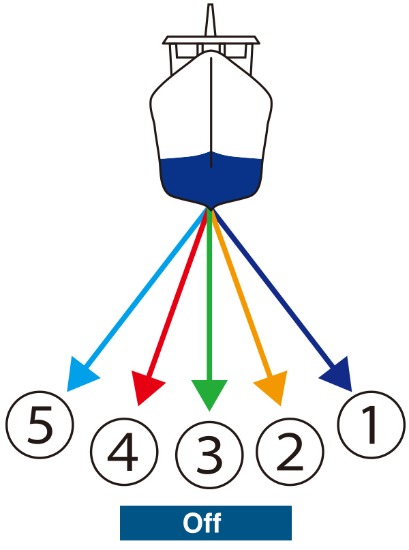
Five beams are alternately transmitted
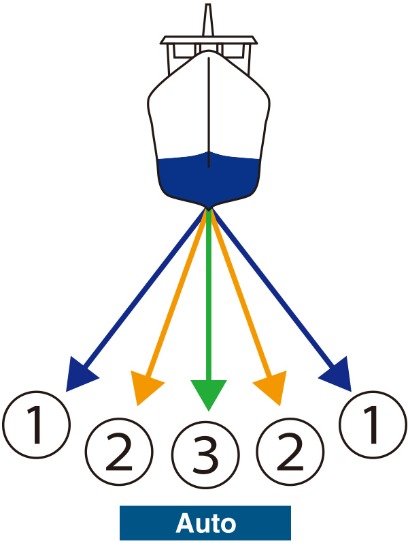
Some beams are simultaneously
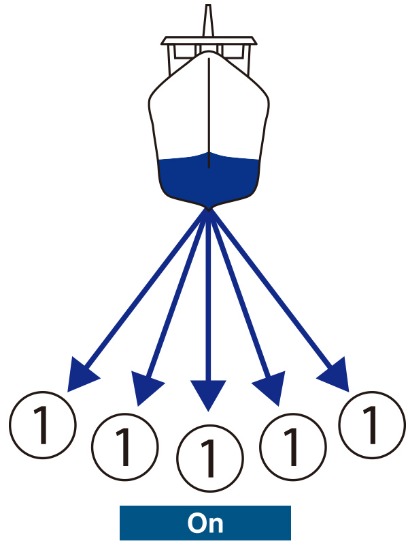
Five beams are transmitted in succession
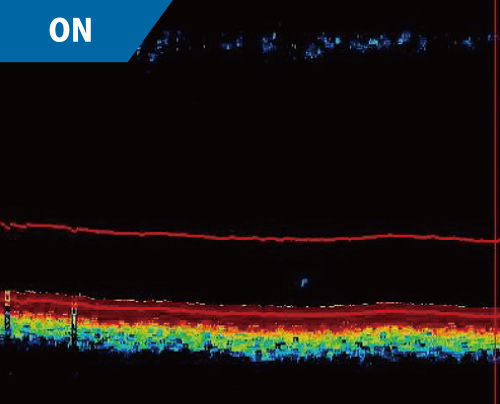
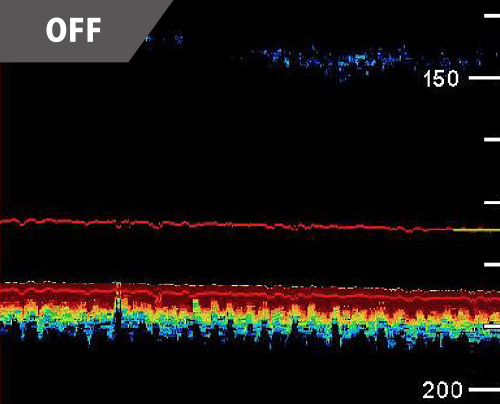
Pitching and rolling produces adverse effect not only on the sounding image, but also on measurement of fish size. With FURUNO exclusive Stabilizer Technology, the FCV-38 can stabilize both TX and RX beams independently so that the picture will remain accurate.
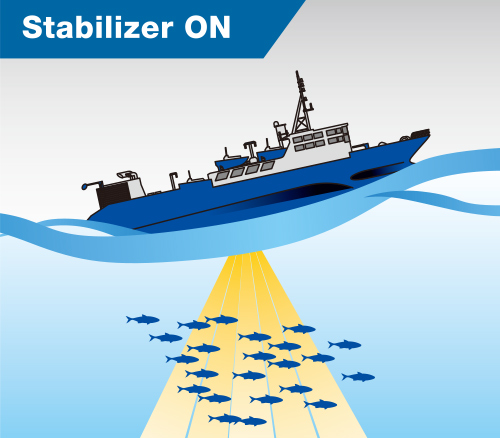
Stabilizer keeps the beam on the designed target.
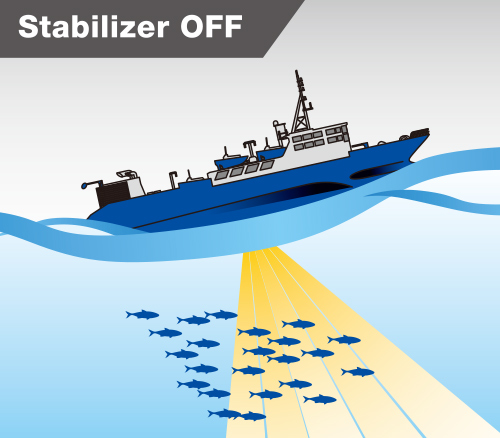
A beam affected by pitching and rolling fails to detect the target fish.
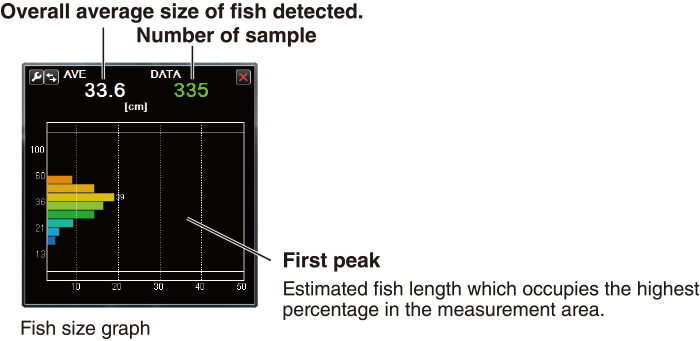
The FCV-38 measures the size of fish in the selected area, and displays the information in a graph that can be understood at a glance. The split-beam technology has improved the accuracy and reliability of fish size measurements and graphs (max. 3).
By analyzing the size, volume and movement of a targeted school of fish, operators can easily decide what to catch and what not to catch. It is indispensable for deciding when to go for a catch and eliminate a school of fish that are smaller than desired. In addition, it greatly contributes to the management and study of fisheries resources.
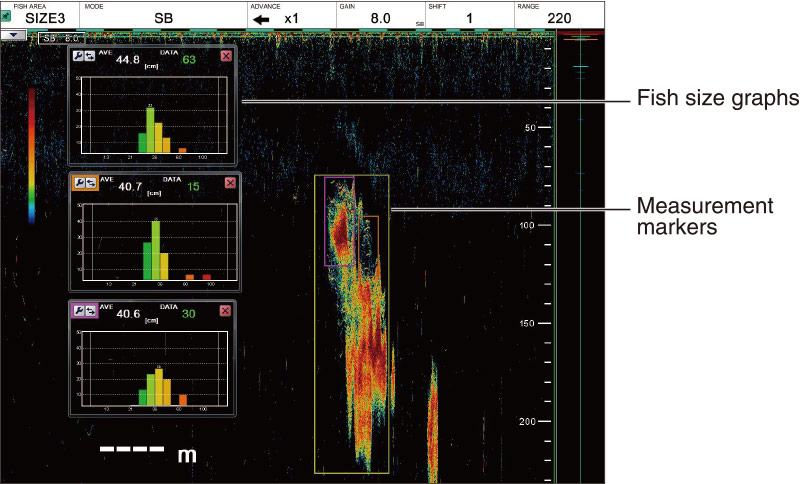
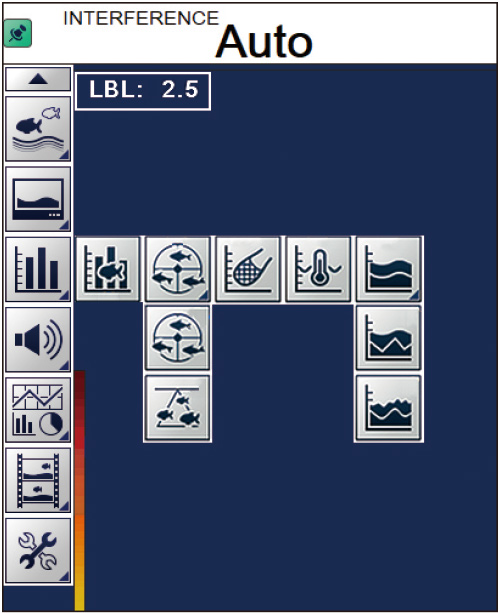
FCV-38 has four methods of fish size measurement. You can select your favorite measurement method from InstantAccess bar™ by just clicking on the menu button.
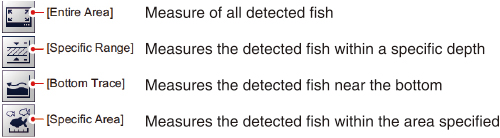
The fish size measurement function includes particularly useful tools to help the user keep track of targets. For example, the tool [Auto Depth] automatically adjusts the depth of the measurement area until more fish are detected if the target fish has fallen below the set limit or has left the measurement area. The tool [Auto Area] can be used to automatically move and adjust the measurement area to areas with a large number of single fish.
The fish size graph shows fish size within a user-selected measuring area.
The bar graph shows size and proportion of fish in the measuring area selected.
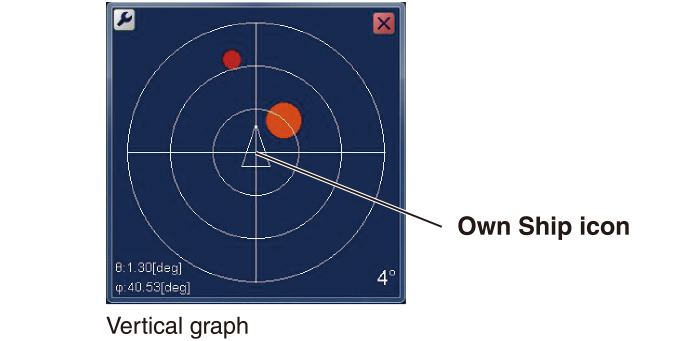
The target graphs plot, within a circle representing the target measurement range, individual fish in relation to your vessel.
Two types of graphs, vertical and horizontal are available.
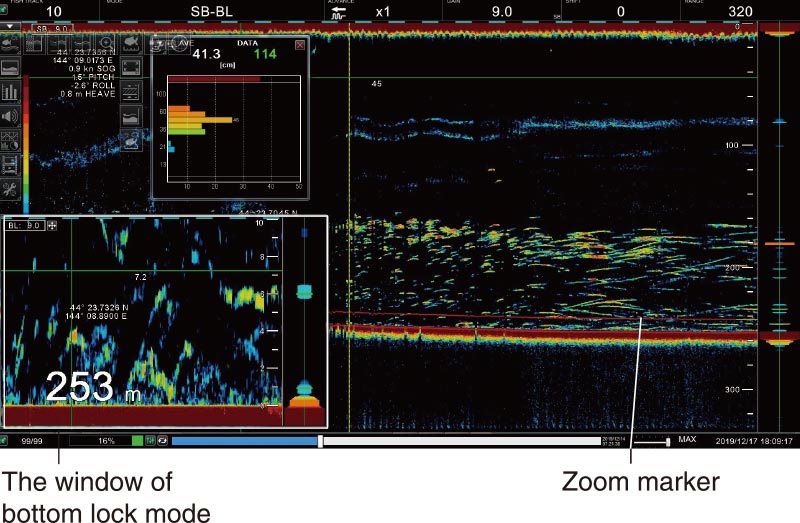
Zoom displays enlarge the specified area of the split-beam display. This mode allows you to learn more about the sea floor and the density of schools of fish. The four modes are bottom lock, bottom zoom, marker zoom, and bottom discrimination.
The expansion range is available from 2m to 200m depth. You can also freely change the window size by dragging and dropping the window frame.
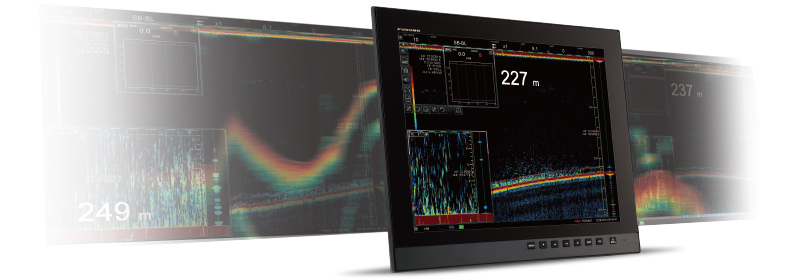
A maximum of 99 screenshots can be saved on the processing unit. You can also replay the echo display at any time if you wish to see it again*1. This is helpful in comparing the sizes of schools of fish. For external memory devices*2, the number of files that can be saved depends on the capacity of the device.
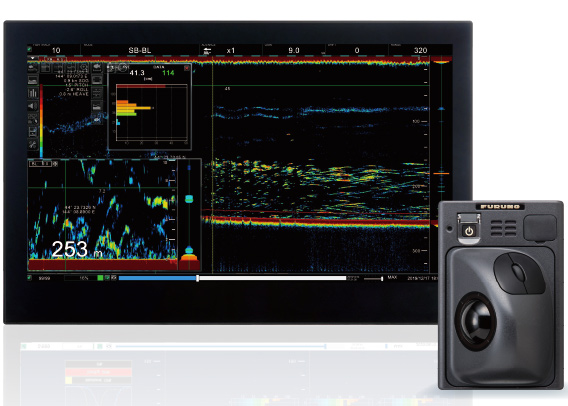
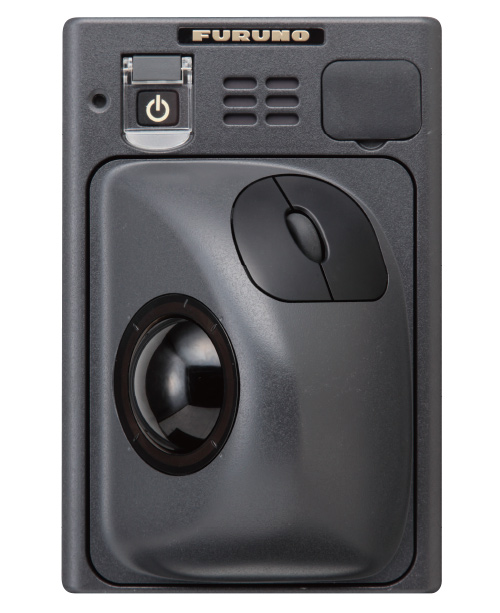
The FCV-38 can be operated easily and quickly with its trackball. The screen header also contains Range, Shift, Sensitivity, Image Feed, and Display Mode menus that can be immediately accessed when required. Other functions can also be accessed immediately by setting them in the InstantAccess bar™ as desired*.
The output of scientific data in netCDF4 format will contribute to fish stock assessment etc. Data analysis software that can read data in netCDF format is currently being developed in some institutes*.
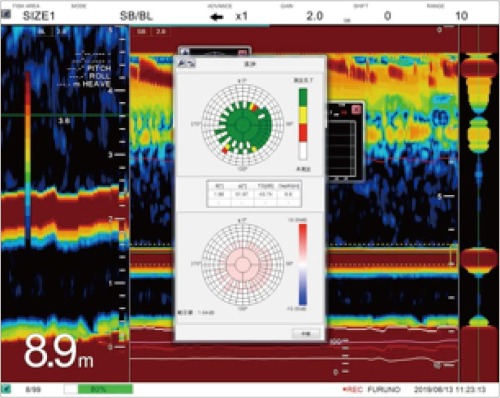
Calibration is mandatory for acoustic resource surveys. Thanks to a more accurate calibration function and an improved user interface, you can easily check the status of the data acquisition. In addition, the detection zone, its progress and completion can be viewed at a glance on the calibration screen.
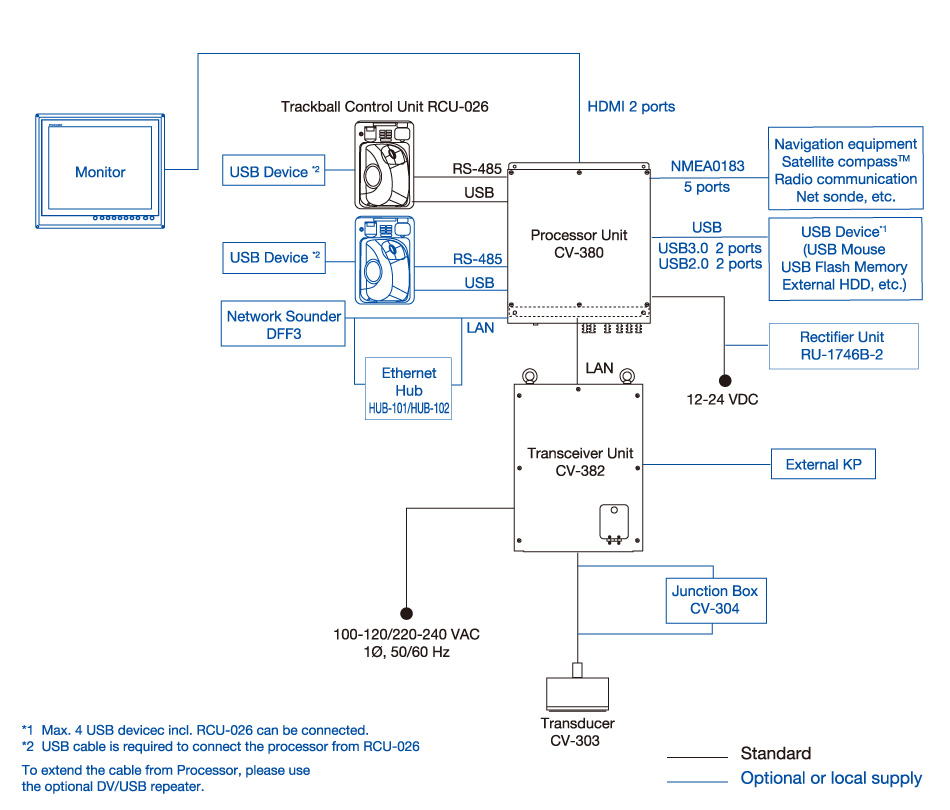
1 UNIT
1 UNIT
1 UNIT
1 UNIT
1 pc.
1 SET
CV-304-10/20/50 (with 10/20/50 m cable)
RU-1746B-210 or AC/DC Power Supply Unit PR-241
5.3/10.3 m
30/50/100 m
HUB-101/HUB-102
| Name | Last update |
|---|---|
| Nov 5, 2025 | |
| Feb 24, 2021 |
Contact a local distributor for further details.
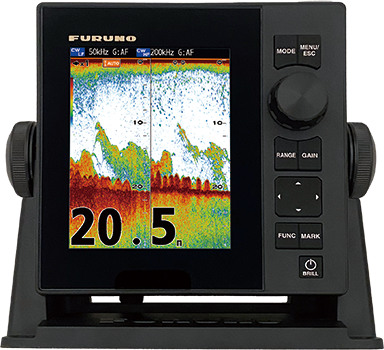
Model
FCV-689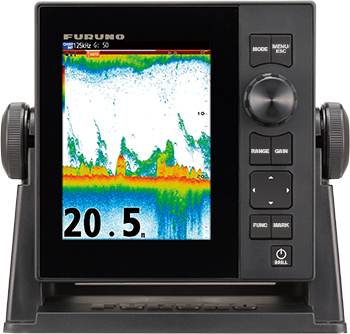
Model
FCV-600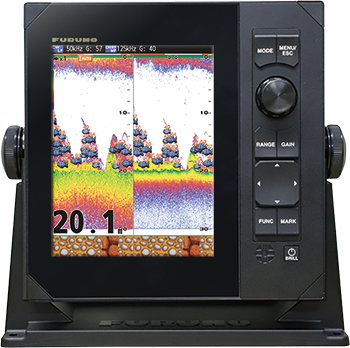
Model
FCV-800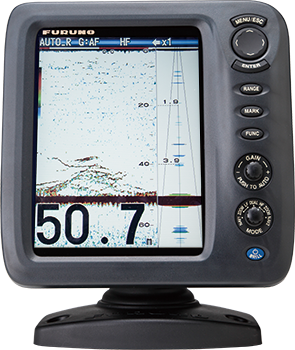
Model
FCV-588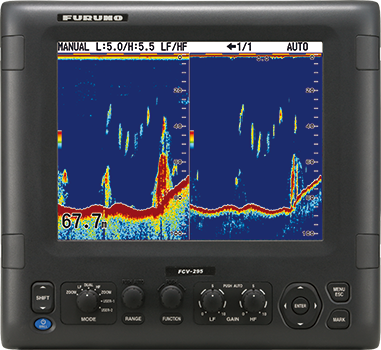
Model
FCV-295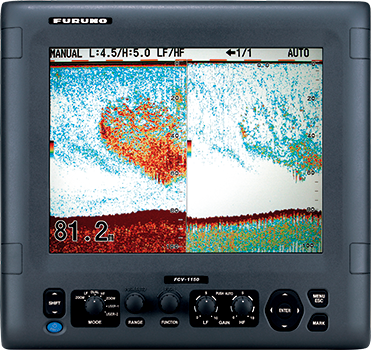
Model
FCV-1150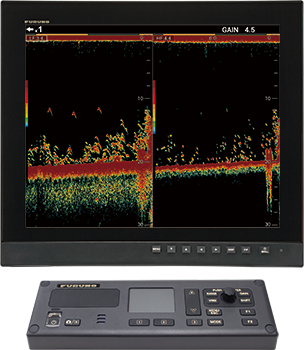
Model
FCV-1900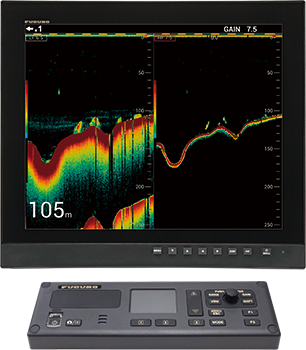
Model
FCV-1900B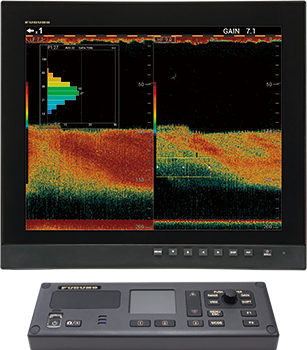
Model
FCV-1900G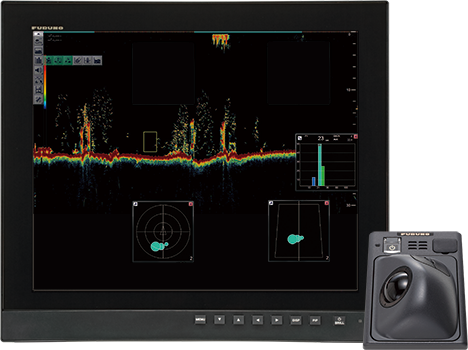
Model
FCV-2100-MARK-2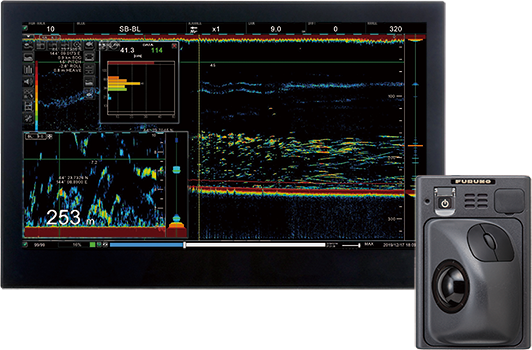
Model
FCV-38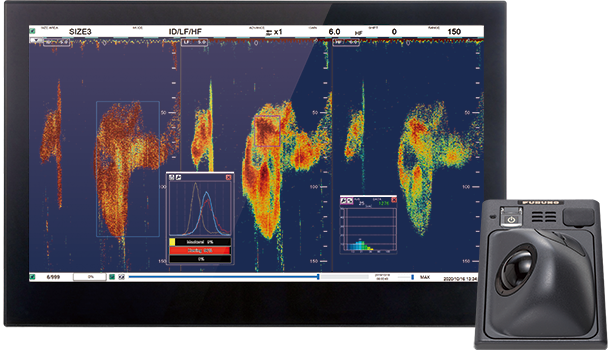
Model
FSS-3BB
Model
DFF1UHD+
Model
DFF3-UHD